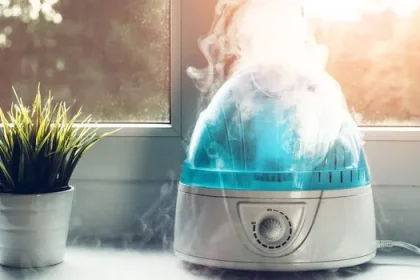

Why Humidifiers Become Mold Hotspots
Humidifiers are designed to release moisture into indoor air—but moisture without control creates ideal mold conditions. When water sits too long, airflow is poor, or cleaning is inconsistent, mold can develop quickly and spread microscopic spores into your living space.
This is not just a cleanliness issue. Mold exposure is linked to respiratory irritation, allergic reactions, asthma flare-ups, and eye or skin discomfort, especially in sensitive individuals.
Preventing mold inside a humidifier is far easier—and far safer—than dealing with indoor mold contamination later.
Core Principle: Mold Needs Three Things
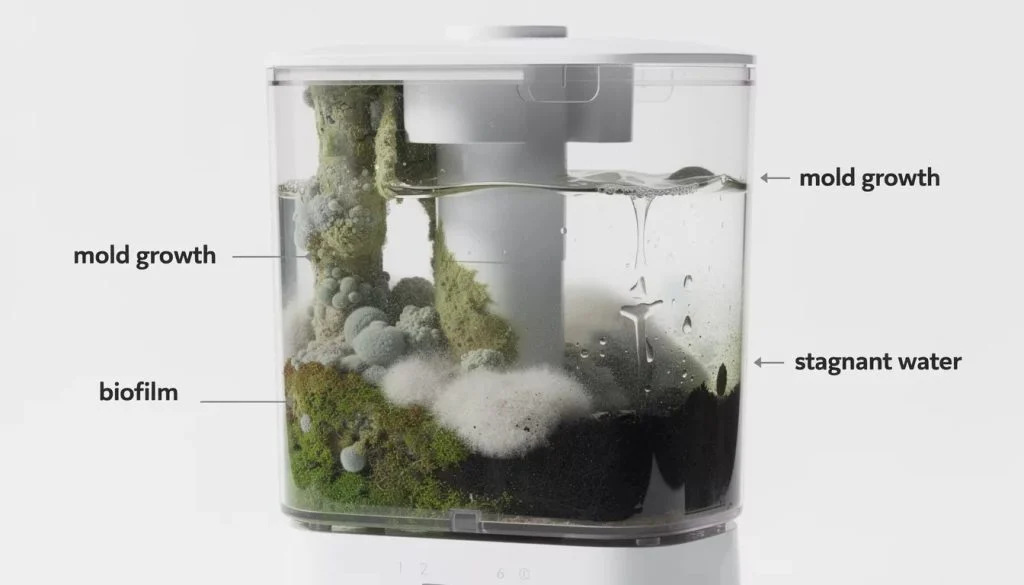
Mold growth always requires:
- Moisture
- Stagnant air
- Organic residue
Remove even one of these, and mold cannot thrive.
The following five strategies target all three.
1. Control Water Quality Inside the Humidifier
The type of water you use directly affects mold risk.
- Use distilled or demineralized water instead of tap water
- Tap water contains minerals that leave residue inside the tank
- Residue feeds mold and bacteria over time
Even if mold is not visible, mineral buildup silently accelerates microbial growth.
Rule: cleaner water = lower mold probability.
2. Empty and Dry the Tank Daily
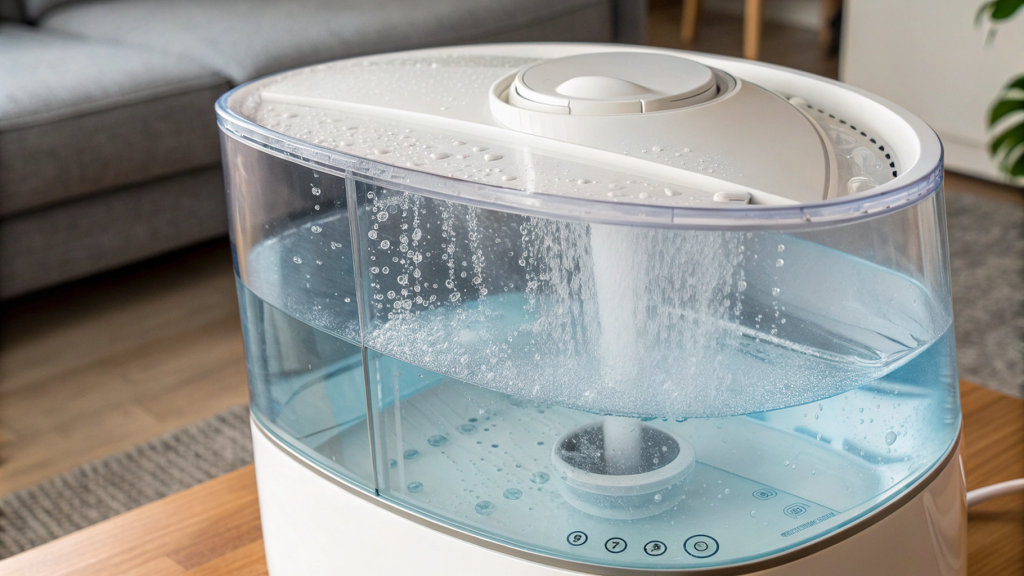
Standing water is the most common cause of humidifier mold.
Best practice:
- Empty the tank every day
- Let all components air-dry completely
- Never leave water sitting overnight
Mold does not need days—it can begin developing within 24–48 hours under humid conditions.
If there is no persistent moisture, mold cannot survive.
3. Clean the Humidifier on a Fixed Schedule
Irregular cleaning allows invisible mold to establish before detection.
Recommended routine:
- Light rinse: daily
- Deep clean: every 3–7 days
- Follow manufacturer-approved cleaning methods
Pay special attention to:
- Tank corners
- Rubber seals
- Filter housings
Mold often grows inside surfaces, not where it is immediately visible.
4. Maintain Proper Indoor Humidity Levels
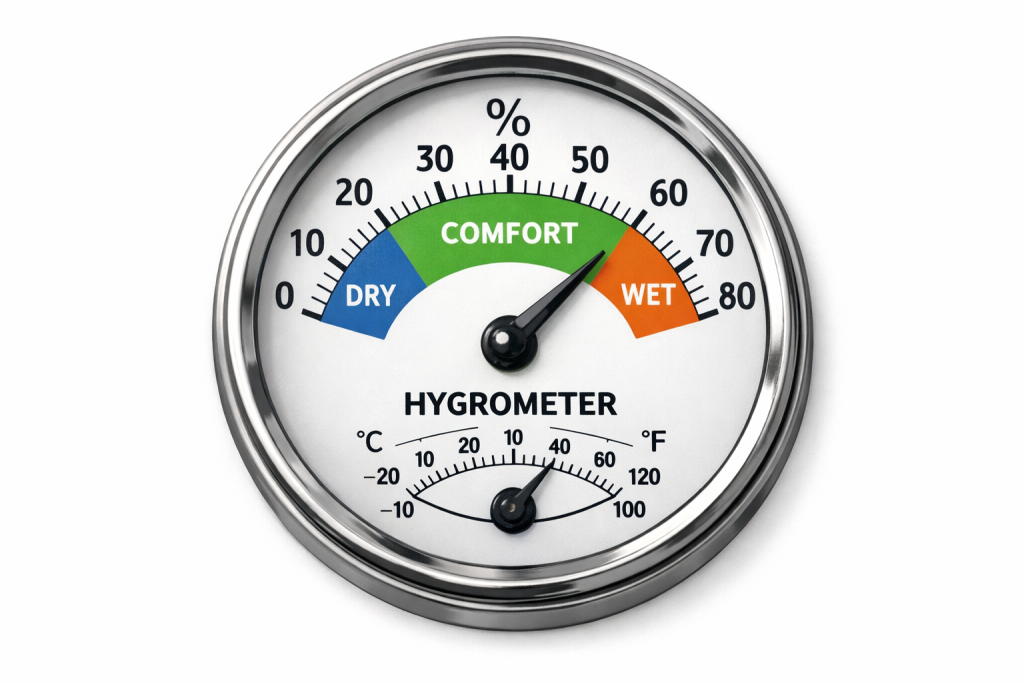
Over-humidifying your home increases mold risk everywhere—not just in the humidifier.
Safe indoor humidity range:
- 30%–50%
Above 60%:
- Mold growth accelerates on ceilings, walls, and attic surfaces
- Condensation forms on cold surfaces
Use a hygrometer to monitor humidity accurately instead of guessing.
A humidifier should regulate comfort—not saturate the air.
5. Ensure Adequate Ventilation and Placement
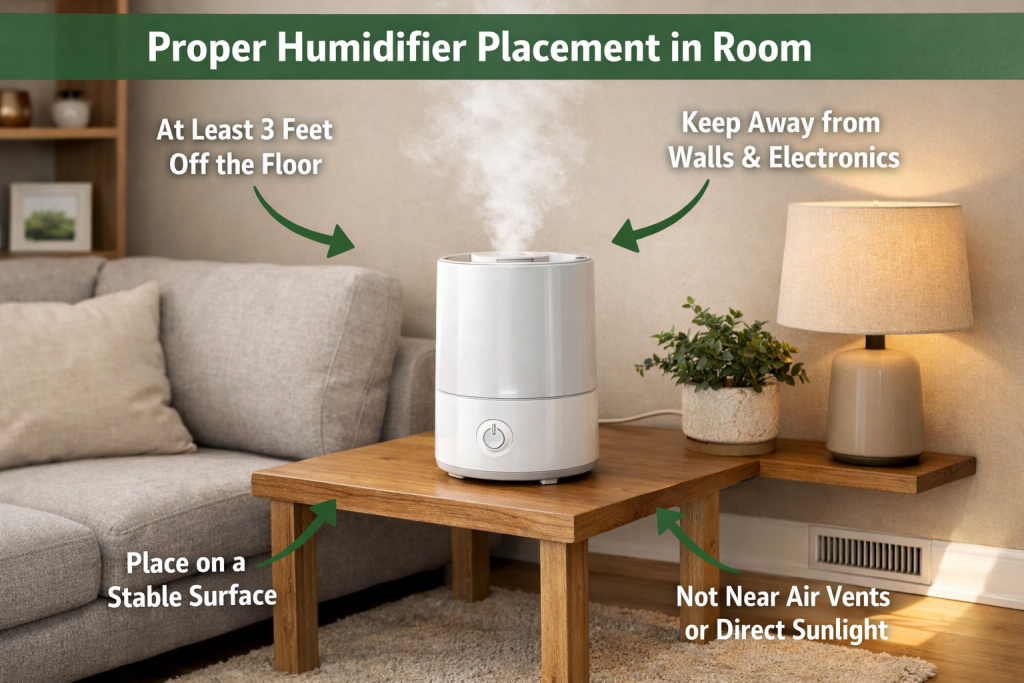
Where you place a humidifier matters.
Avoid placing it:
- Directly under ceilings
- Near cold walls or windows
- In poorly ventilated rooms
Warm, humid air meeting cold surfaces creates condensation, which leads to:
- Ceiling mold
- Wall cavity moisture
- Hidden microbial growth
Always allow airflow around the unit and the room.
Health Risks of Mold Exposure (Why Prevention Matters)
Scientific health bodies have linked mold exposure to:
- Coughing and wheezing
- Nasal congestion
- Eye and skin irritation
- Worsening asthma symptoms
People with allergies, asthma, or weakened immune systems experience more severe reactions.
Preventing mold at the source—inside your humidifier—reduces airborne exposure throughout the home.
Common Misconception: “If I Can’t See Mold, It’s Not There”
False.
Mold often grows:
- On internal surfaces
- Inside tanks and tubing
- On the underside of components
By the time mold becomes visible, spores may already be circulating.
Prevention is not about appearance—it’s about environment control.
Final Takeaway: Mold Prevention Is a System, Not a Hack
There is no single trick that prevents mold forever.
Effective prevention comes from:
- Clean water
- Dry surfaces
- Controlled humidity
- Consistent maintenance
When these elements work together, mold has no environment to survive.
A well-maintained humidifier improves air comfort without compromising health.
Compare Local Home Specialists Near You
Tell us what kind of help you need, then compare nearby businesses by location, Google rating, review volume and contact options.
HomeFix Local Match
Turn a home problem into a practical local hiring decision. Check the clues, see the specialist types that fit, open focused surrounding-location searches, then compare the strongest three before you call.
 YOUR PROBLEM
YOUR AREA
COMPARE 3
✓ Ready to compare
YOUR PROBLEM
YOUR AREA
COMPARE 3
✓ Ready to compare
What is happening?
Choose the closest problem type, then check every clue that applies. Your selections change the specialist order.
Where should the search focus?
Use Google’s “near me” context or enter the area you actually want a specialist to serve.
Simple local search: open nearby Google results, choose the businesses that look suitable, then compare your best three here before you call.
Problem snapshot
Who should you call first?
These are the specialist types most likely to fit the clues you selected.
Search around your location
Compare your top three
Use the same factors for each option so a high star rating does not hide a weak scope, poor diagnosis, missing credentials or unclear aftercare.
Comparison result
Your result combines the Google signals you entered with the practical hiring checks you completed.
Questions to ask every finalist
Use the same questions with each shortlisted business so the comparison stays consistent.
FAQ
Can mold grow inside a humidifier?
Yes. Humidifiers create constant moisture, which allows mold to grow inside tanks, filters, and internal surfaces if not cleaned regularly.
Is humidifier mold harmful to health?
Mold spores released into the air may cause coughing, wheezing, nasal congestion, eye irritation, and worsen asthma or allergies in sensitive individuals.
How often should a humidifier be cleaned to prevent mold?
Light rinsing should be done daily, while deep cleaning should occur every 3 to 7 days depending on usage and manufacturer instructions.
Does using distilled water reduce mold growth?
Yes. Distilled water contains fewer minerals, which reduces residue buildup that mold and bacteria feed on.
What humidity level prevents mold growth?
Indoor humidity should be kept between 30% and 50%. Levels above 60% significantly increase mold risk.