
Clinical depression usually means major depressive disorder: a sustained change in mood or interest, accompanied by other symptoms, that causes significant distress or interferes with daily life. A typical episode lasts at least two weeks, but worsening symptoms or safety concerns deserve help sooner. The useful next step is to recognize the pattern, arrange an assessment and discuss a treatment plan that fits your needs.
| What you notice | What it means for the next step |
|---|---|
| Low mood or lost interest with changes in sleep, appetite, energy or concentration | Arrange an assessment if changes persist, worsen or disrupt daily life. A checklist alone cannot diagnose depression. |
| You still work or socialize, but doing so takes much more effort | Functioning outwardly does not rule out depression. Explain the hidden effort and what has stopped happening at home. |
| Past periods of unusually high energy with much less need for sleep | Tell the clinician before treatment is selected. This can change the diagnosis and treatment approach. |
| Immediate danger, severe self-neglect or new psychotic symptoms | Prioritize urgent help rather than finishing the rest of this guide. |
Which symptoms suggest clinical depression rather than a difficult week?
The main distinction is a sustained change in your usual emotional state and functioning, not whether you can identify a reason to feel sad. Low mood may feel like sadness, emptiness or irritability; loss of interest can mean that familiar pleasures no longer feel rewarding. Sleep, appetite, energy, concentration, movement and feelings of self-worth may also change.
Clinicians consider symptoms together with their frequency, duration and impact. They also ask about safety and other explanations, because poor sleep or fatigue alone is not enough to establish major depression. You do not have to reach a particular level of distress before asking for an assessment, and the two-week benchmark is not an instruction to wait when you are deteriorating.
Compare the pattern with your usual self
Use a short comparison to explain what has changed, rather than starting an elaborate mood diary. The purpose is to make your first conversation clearer, not to award yourself a diagnosis. A phone calendar, a private voice memo or a conversation with someone who knows you can help if recall is difficult.
- Think of your usual routine before the change: for example, enjoying dinner, replying to friends or managing work without an unusually long recovery afterward.
- Identify the main change in mood or interest, then one associated change such as early waking, appetite loss or difficulty concentrating.
- Estimate when it began and describe one effect on daily life. “For about three weeks, I have stopped enjoying dinner and keep missing work deadlines” is more useful than “I feel bad.”
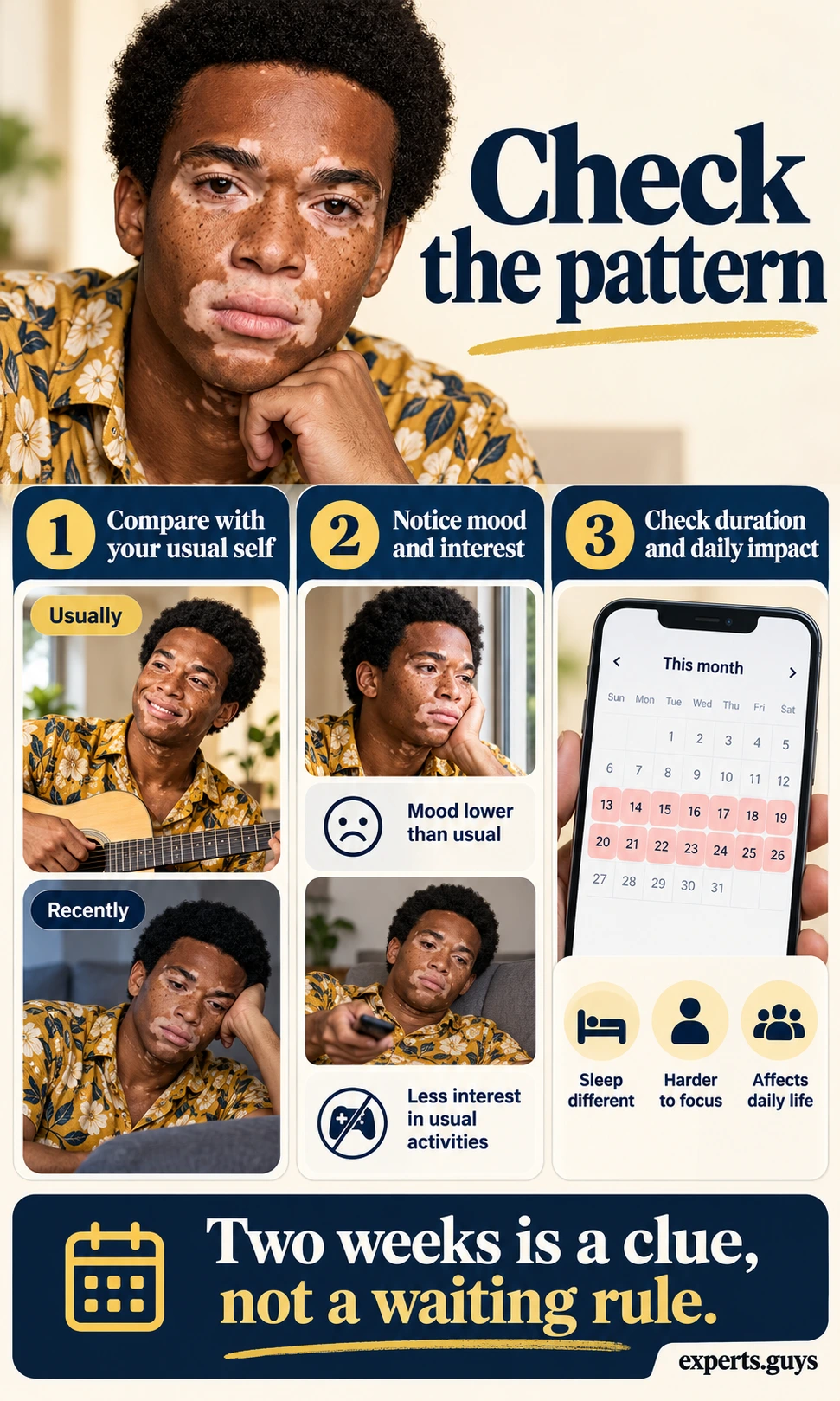
The example above is illustrative, not a diagnostic threshold. A common mistake is treating one productive day as proof that the problem has ended; the wider pattern matters. If details feel overwhelming, use just one change and one example, and let the clinician help fill in the rest.
Physical discomfort can accompany depression, but new physical symptoms still deserve appropriate medical attention. Do not assume that pain, weight change or exhaustion must be psychological. The depression symptoms guide explores the broader symptom range; this page focuses on what those changes mean for assessment and treatment decisions.
Choose help by urgency, not by a score
A low screening score cannot cancel a serious safety concern. Screening questionnaires can support a clinical conversation, but they do not assess every diagnosis or every circumstance. Your ability to stay safe and meet basic needs is more important than finishing an online test.
- For immediate danger or an inability to stay safe, use emergency services or the nearest emergency department and involve a trusted person.
- For new hallucinations, alarming beliefs, rapidly worsening symptoms or difficulty eating and drinking, seek urgent clinical assessment. If serious physical illness or immediate danger is present, use emergency care.
- For persistent changes without an immediate crisis, request a primary-care or mental-health appointment. If the offered wait does not match worsening symptoms, explain the change and ask for an earlier assessment.

Completion here means reaching the appropriate help route, not collecting more observations. If making a call feels impossible, ask someone you trust to sit beside you or help arrange it with your permission. Do not wait to create a perfect history before seeking urgent care.
What causes depression, and what else needs checking?
Depression develops through interacting biological, psychological and social influences. Family vulnerability, major stress, trauma, chronic illness and other circumstances may contribute, but no single factor explains every episode. A clear trigger is not required, and having difficult circumstances does not mean that depression is simply a normal reaction you must endure.
Assessment also considers conditions that resemble or accompany depression. Thyroid problems, medication effects and other illnesses can produce overlapping symptoms, while anxiety or substance use may complicate the picture. An examination or targeted tests may be appropriate, but a normal blood test does not rule out depression and there is no routine blood test that confirms it.
Bring the history that could change the diagnosis
Tell the clinician about past changes in energy and sleep as well as the current low period. Sleeping less because you are exhausted and anxious differs from needing unusually little sleep while feeling energized, more talkative or impulsive. Neither description diagnoses bipolar disorder on its own, but the distinction can materially change the assessment.
- Mention any periods of unusually elevated or irritable mood with increased energy, much less need for sleep, racing thoughts or risky behavior. Describe what happened rather than choosing a label.
- Bring your current medication and supplement list from a pharmacy app, patient portal or the containers themselves. Include recent changes and anything bought without a prescription.
- Explain alcohol or drug use, recent illness and any relevant past treatment response. If exact dates are unclear, say so rather than guessing.

A common error is leaving out a high-energy period because it felt productive rather than problematic. Another is stopping a medicine to test whether it caused the symptoms; medication changes belong in a discussion with the prescriber. If preparing a full history is too much, bring the medicine list and identify the one past episode that stands out.
The useful outcome is a more complete assessment, not a self-selected diagnosis. For the wider distinction, see depression, anxiety or bipolar disorder. If alcohol dependence may be present, do not attempt abrupt withdrawal alone; tell the service arranging your care so withdrawal risk is assessed.
Send a short appointment message
You can request help before knowing which diagnosis applies. Describe the change, the effect on your life and what you are asking the service to do. A secure patient portal, a phone call or an in-person request can all start the process; an ordinary inbox is not an emergency service.
- Start with the concern: “I have had low mood and lost interest in usual activities.”
- Add one concrete effect and an approximate duration: “It has been about three weeks, and I am struggling to get to work.”
- Ask for assessment and next steps: “Can I arrange an appointment, and what should I do if things worsen before then?” Mention safety concerns directly.
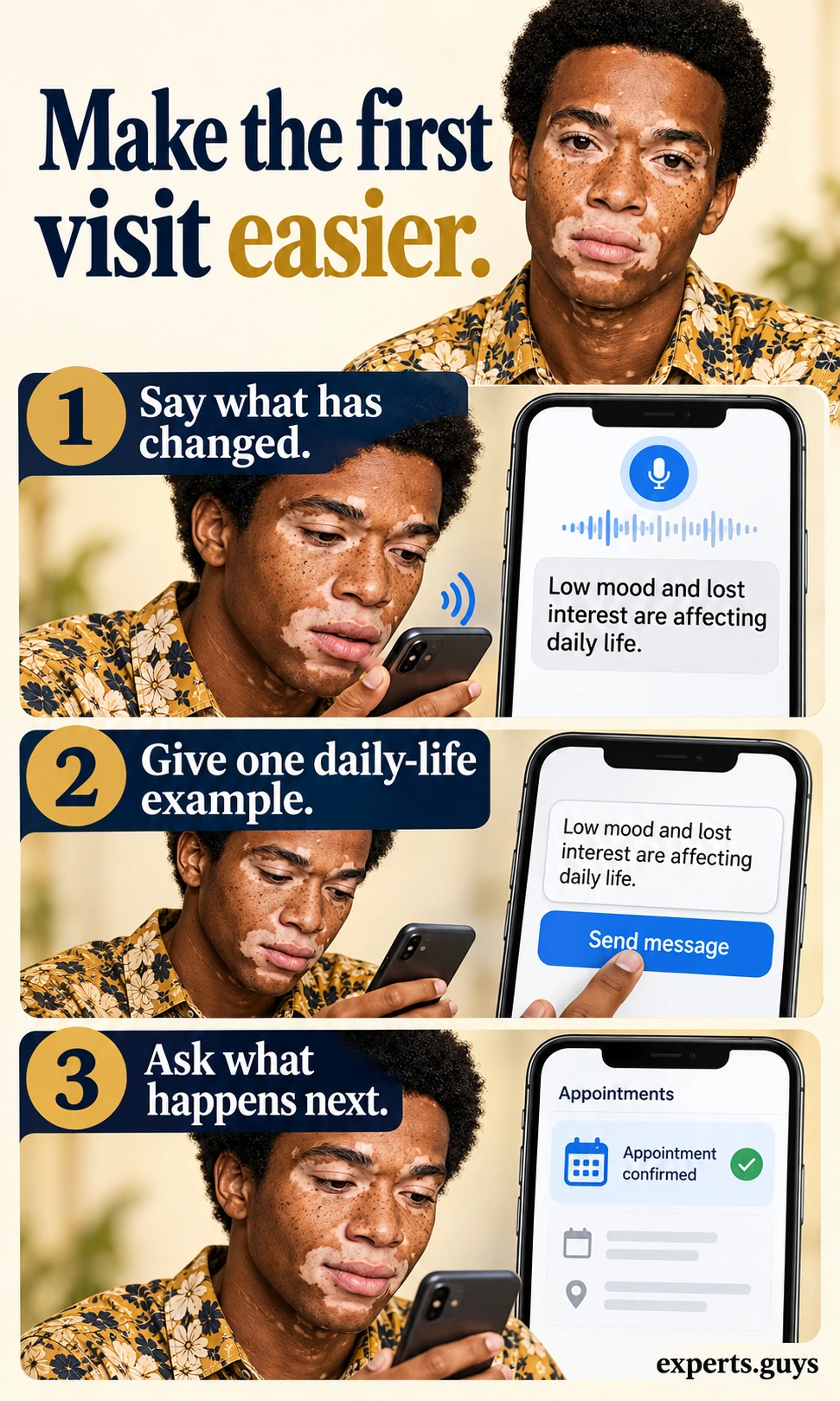
This sample message is an editorial example, not a clinical screening form. If typing is difficult, use speech-to-text in a private setting or read the message aloud during a call. The checkpoint is a confirmed response or appointment; if no reply arrives within the service’s stated timeframe, call rather than assuming the request was received.
How are therapy and medication chosen?
Treatment depends on symptom severity, safety, past response, preferences and what can realistically be accessed. Talking therapy, medication or a combination may be appropriate, while severe or persistent illness may need specialist options. A choice that works for someone else is not automatically the best starting point for you.
| Option | What it can address | What to clarify |
|---|---|---|
| Talking therapy | Patterns of thinking, behavior and relationships that maintain difficulties | The approach, therapist’s relevant training, session format, goals and how progress will be reviewed. |
| Antidepressant medication | Depressive symptoms through effects on brain signaling | Expected benefits, side effects, interactions, review timing and what to do if problems arise. |
| Combined treatment | Symptoms and the practical or psychological patterns that accompany them | Who coordinates care and whether the schedule and cost are manageable. |
| Specialist treatment | Severe illness or insufficient response to an appropriate treatment plan | Whether a specialist reassessment or treatments such as ECT or rTMS are appropriate; these are not do-it-yourself options. |
Therapy is more than being encouraged to think positively. Cognitive behavioral therapy works with unhelpful thought and behavior patterns, while interpersonal therapy focuses on relationships and life events that interact with mood. These are examples rather than an exhaustive list; the types of psychotherapy for depression page owns the detailed therapy comparison.
Compare fit before choosing a treatment
Bring the difficulty you most want help with into the treatment discussion. This turns a broad question such as “Which treatment is best?” into a practical conversation about symptoms, preferences and constraints. It also gives you and the clinician something meaningful to revisit.
- Name one priority, such as getting through meals, returning to work reliably or reconnecting with people. This is a discussion goal, not a promised outcome.
- Ask what the proposed treatment targets, what participation involves and which drawbacks matter for your medical situation.
- Explain your preferences and ask what alternatives are reasonable. Confirm how you will decide whether to continue, adjust or reconsider the plan.

For example, someone who cannot attend daytime sessions might ask about evidence-based remote therapy rather than assume therapy is impossible. Someone worried about medication-related side effects can discuss that concern before starting, rather than silently abandoning treatment. If comparing several choices feels exhausting, ask the clinician to explain the most suitable starting option and one reasonable alternative.
Remove the barrier that could stop the plan
A clinically reasonable plan can still fail if you cannot attend it. Cost, travel, language, work hours and privacy are practical treatment issues, not evidence of poor motivation. Address the obstacle most likely to stop the next appointment before adding more tasks.
- Identify the single obstacle: for example, no private room for a video session or a session time that conflicts with work.
- Ask the service about a realistic alternative, such as an in-person appointment, a different time, accessible communication or lower-cost care. Availability varies; do not assume a listed option is offered.
- Confirm the appointment details and what you need to join or attend. If desired, ask a trusted person to help with transport or the first call.

The checkpoint is a workable next appointment, not signing up for every available app. If the alternative still does not fit, tell the service which obstacle remains and ask for another route. For remote care, clarify privacy, the provider’s authorization to treat someone in your location and what happens if the connection fails.
What should happen after treatment starts?
Early follow-up checks safety, side effects, participation and the first signs of change. Antidepressants often take several weeks to help, and sleep or appetite may improve before mood; that does not mean you should wait silently through worsening symptoms. Therapy also needs a clear review process so that the approach can be adjusted when it is not meeting the agreed goals.
Leave with a review date and an earlier-contact route
Ask when the first review will happen and who to contact before then. NICE recommends reviewing treatment response within two to four weeks, with earlier antidepressant review in some circumstances, including particular suicide-risk concerns. Your clinician should set the actual schedule for your age, symptoms, treatment and risk; the calendar is not permission to ignore deterioration.
- Confirm the review date before leaving, then add it to your phone calendar if useful.
- Ask which side effects require routine contact and which need urgent care, using the instructions for your actual medication.
- Save the service’s earlier-contact route. If suicidal thoughts emerge or worsen, or you become markedly agitated or unusually energized with little sleep, seek prompt assessment; use emergency care for immediate danger.

Do not stop, increase or reduce an antidepressant on your own. Abrupt stopping can cause withdrawal symptoms, and any planned reduction should be agreed with the prescriber. If you miss a dose, use the medicine’s specific instructions or ask a pharmacist rather than doubling a dose by guesswork.
A common mistake is keeping a side effect quiet because you think reporting it means treatment has failed. Describe when it started and how it affects everyday life so the prescriber can judge the next step. If reduced emotional range is the concern, the article on antidepressant emotional blunting explains that specific discussion in more detail.
Use progress to guide the next conversation
Recovery is more than having one better afternoon or a lower questionnaire score. Look at symptoms, daily functioning and safety together, because improvement in one area may coexist with important unresolved difficulties. A brief check before the review is enough; constant mood checking is not required.
- Compare one meaningful activity with the starting point: for example, whether eating, concentrating at work or replying to a friend is becoming more manageable.
- Name what remains difficult and any new side effects or safety concerns. A voice memo or a brief conversation can replace a written log.
- Bring that comparison to the review and ask whether the current plan needs more time, practical support or reassessment. Agree the next review rather than making medication changes yourself.
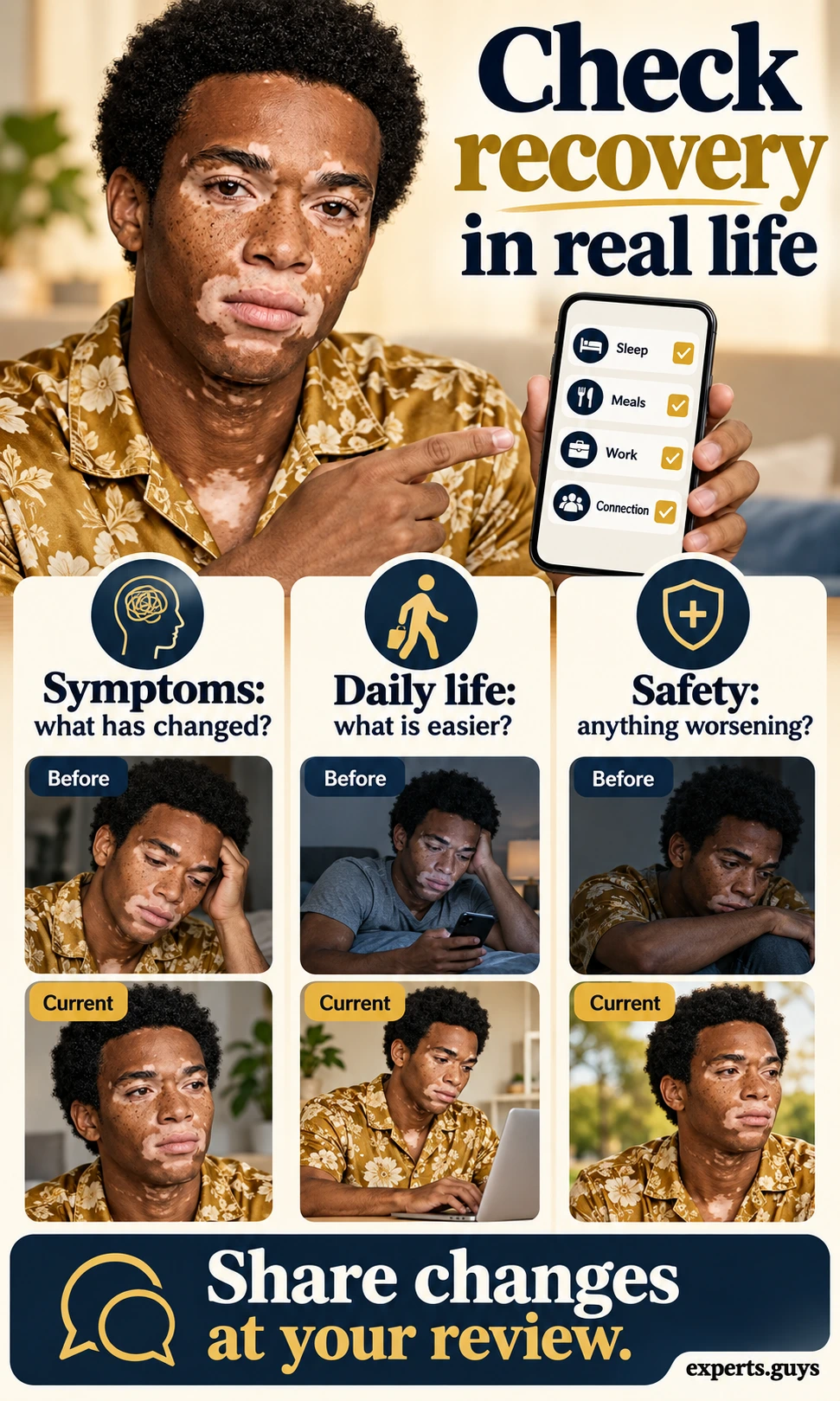
An illustrative update might be: “I am sleeping more regularly, but I still cannot manage meals and feel no interest in anything.” That mixed picture is useful information, not proof of failure. If nothing is improving, the review can examine the diagnosis, treatment delivery, tolerability and other problems; adding pressure to try harder is not a treatment adjustment.
After improvement, ongoing care may reduce the risk of symptoms returning. The duration of medication or therapy depends on the individual course, previous episodes and the agreed plan, rather than a fixed date chosen from an article. Ask how follow-up and any eventual reduction in treatment will work before making changes.
Frequently asked questions
Can I be depressed even if I still laugh or enjoy something occasionally?
Yes. Brief enjoyment or a good conversation does not rule out a depressive episode. Assessment looks at the overall pattern and its impact, including the effort needed to keep functioning.
Can grief and clinical depression happen together?
Yes. Grief and depression can overlap, and a recent loss does not prevent someone from also experiencing depression. Assessment considers the full pattern rather than deciding solely from the presence of a bereavement.
Does an online depression test give me a diagnosis?
No. A validated questionnaire can help identify symptoms that need discussion, but it cannot replace an assessment of history, safety, functioning and other possible causes. Seek help for concerning changes even if an online result seems reassuring.
Will everyone with depression need medication forever?
No. Treatment type and duration vary with the person’s needs, response and history. Some people benefit from longer treatment, and any medication reduction should be planned with the prescriber.
Does needing a different treatment mean I am beyond help?
No. An inadequate response is a reason to reassess the plan, including diagnosis, side effects, access barriers and whether the treatment has been delivered adequately. It does not establish that recovery is impossible.
Summary: choose the next useful step
Clinical depression is assessed through a pattern of symptoms, their effect on life and the wider medical and mood history. If safety is at risk, use urgent help; otherwise, start with one concrete example of what has changed and request an assessment. Once treatment begins, a workable appointment, a clear review date and an honest discussion of progress are more useful than trying to manage the entire process alone.
Sources and further reading
- National Institute of Mental Health: Depression – symptoms, assessment and treatment.
- National Institute of Mental Health: Talking with a health care provider – preparing for care.
- National Institute of Mental Health: Psychotherapies – treatment questions and access.
- NICE: Depression in adults, treatment and management – shared decisions and follow-up.
- NHS: Diagnosis of depression in adults – assessment and tests.
This article provides general information for adults, not an individual diagnosis or treatment prescription. The images and sample messages are AI-generated or editorial illustrations, not patient stories or evidence of treatment results.