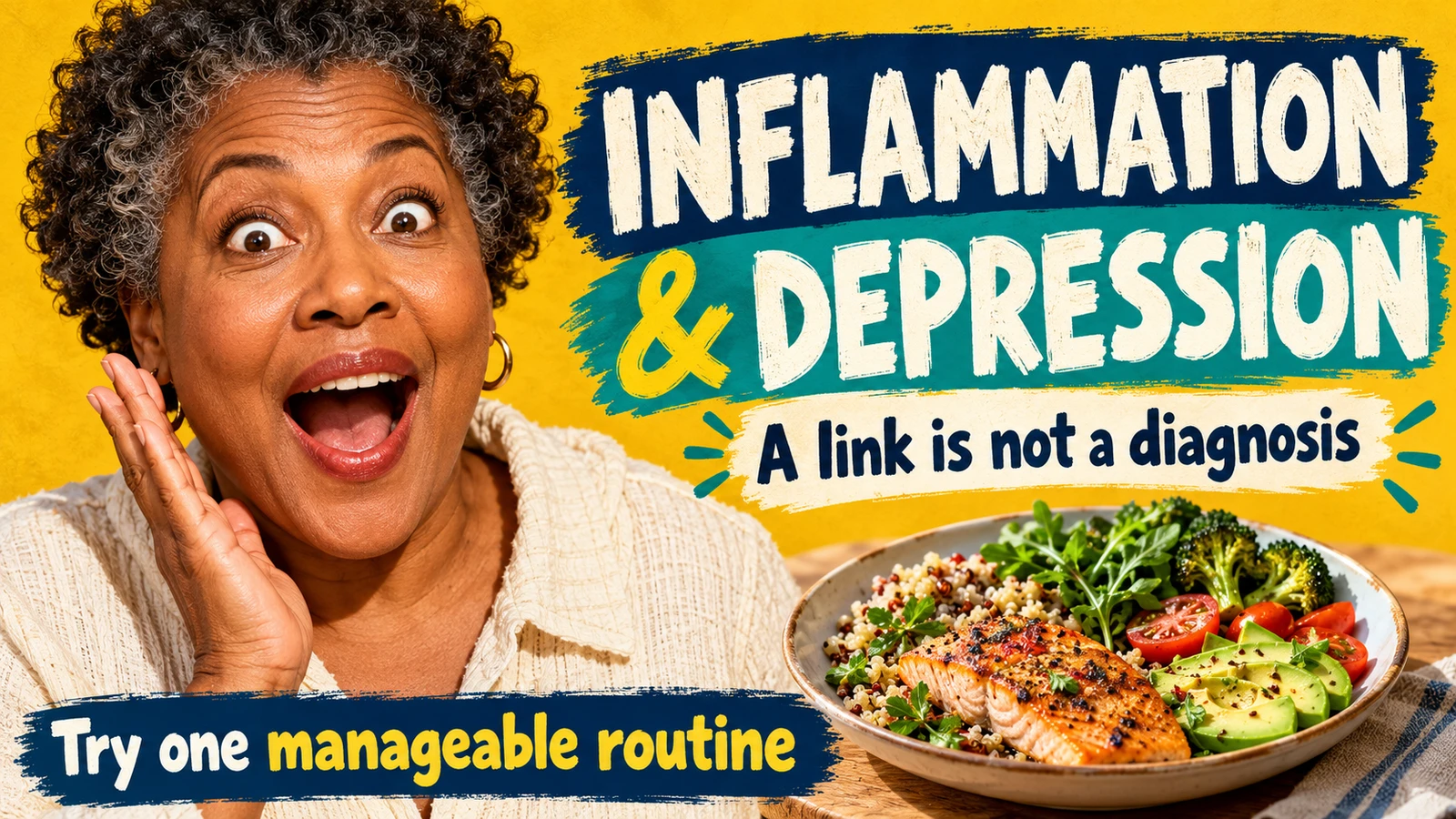

Inflammation may contribute to depression in some people, but it does not explain every case or provide a diagnosis by itself. You can support daily functioning with manageable food, movement and sleep routines while getting appropriate care. These steps do not prove that inflammation caused your symptoms or promise to lower it.
The practical starting point is one difficulty you can address today, rather than a special diet or a blood-test target. Low mood can make ordinary routines feel unusually demanding, so a smaller step is a legitimate choice. If you also have a physical illness, keep its dietary restrictions, activity limits and treatment advice in place.
What can I do today? Choose one manageable routine
Pick the routine that matches the immediate problem and feels safe for you. You do not need to complete all three or rate your mood first. The examples below adapt general self-care guidance into small, observable actions; their short timings are practice suggestions, not treatment doses.
| Today’s difficulty | A useful first step | What counts as completion |
|---|---|---|
| Eating feels too complicated | Assemble tolerated ready-to-eat foods; use one snack if necessary. | Prepare food and make a manageable attempt to eat. |
| You have been sitting and can move safely | Try a short comfortable walk within your usual limits. | Practise the chosen movement and stop to rest. |
| Evening routines keep slipping | Put the screen aside and try a calm low-light activity. | Complete the wind-down period, whether or not sleep follows. |
Make one easy meal when eating feels like a project
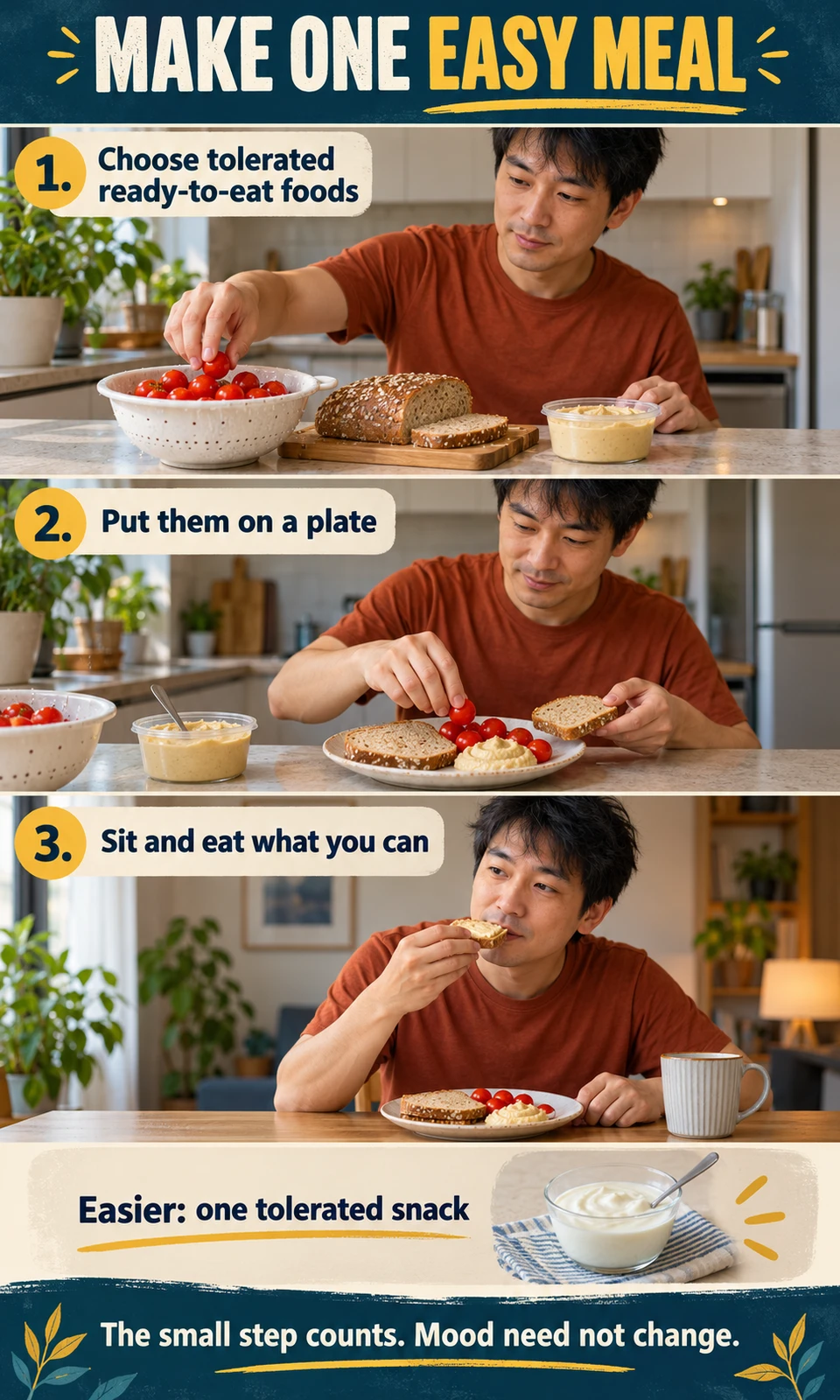
Use a simple assembly meal instead of turning eating into another large task. The NHS guidance on coping with depression supports keeping regular meals and routines. The following food combination is an illustrative example, not an anti-inflammatory prescription; choose foods that fit your allergies, needs and clinical advice.
- Choose tolerated ready-to-eat foods. Use clean utensils and foods stored according to their labels. For example, choose bread, hummus and washed tomatoes.
- Put them on a plate. Keep preparation modest; use a chair or ask for help if standing is tiring. No cooking is needed for this example.
- Sit and eat what you can. A manageable attempt is enough for this practice. You do not have to make a perfect meal or feel better immediately.
Illustrative example: lunch feels overwhelming, so you place bread, hummus and washed tomatoes on a plate and sit down to eat. Easier option: start with one tolerated ready-to-eat snack, such as yogurt if suitable for you, or ask someone to assemble it. Try another manageable eating opportunity later; persistent difficulty eating, weight change or dehydration needs clinical support.
Try a short, comfortable movement break if it is safe
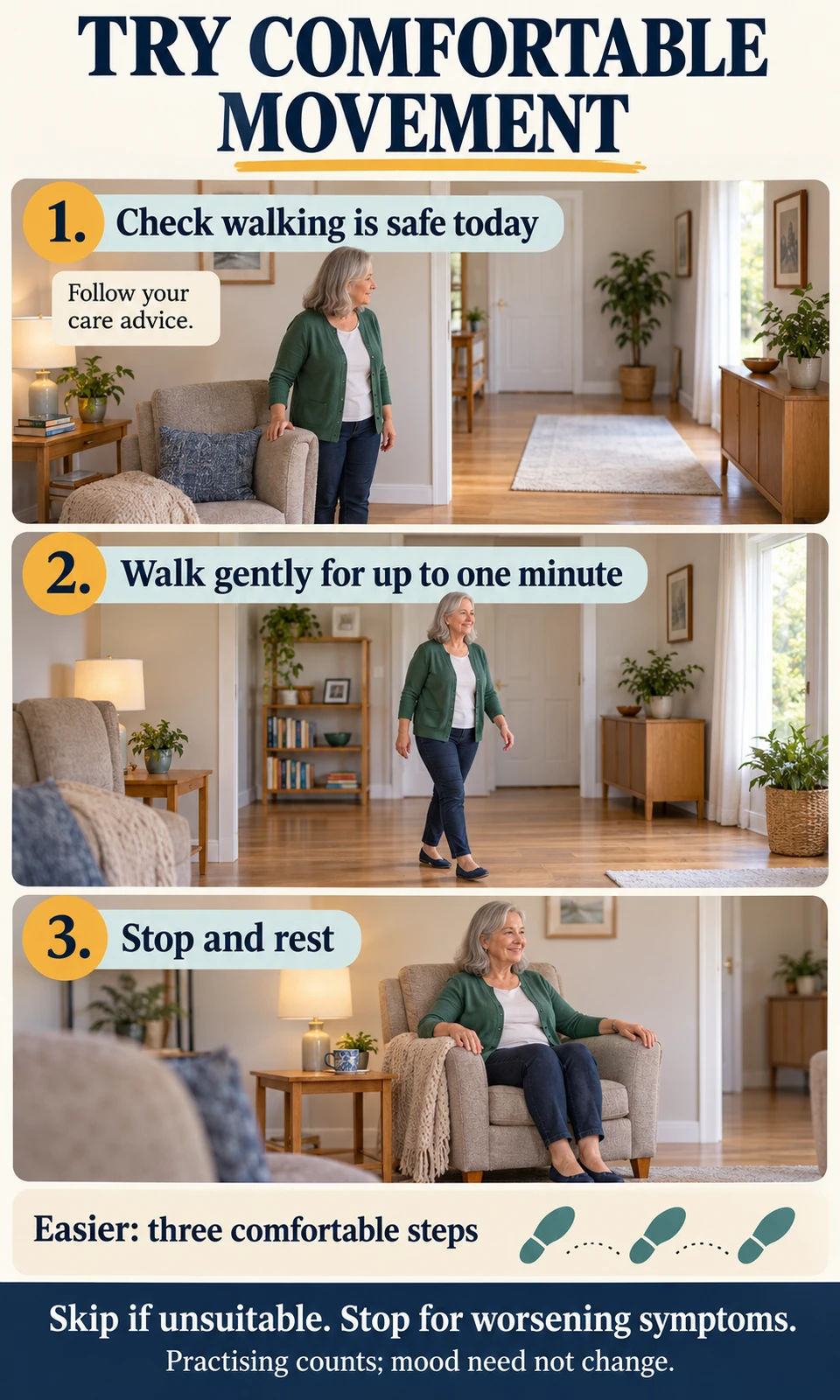
A little movement can support wellbeing, but suitability matters more than hitting a target. NHS physical-activity guidance encourages starting small and choosing what works for you. This brief example is optional and is not an exercise prescription or a way to test whether inflammation is causing depression.
- Check that walking is safe today. Use a clear, familiar indoor route and your usual mobility support. Follow activity restrictions and skip this routine if it conflicts with your care advice.
- Walk gently for up to one minute. Use an easy pace; less time is fine. Stop sooner for pain, dizziness, unusual breathlessness, marked exhaustion or worsening symptoms.
- Stop and rest. Completing the chosen comfortable movement is the outcome. You do not need to extend it or prove that your mood changed.
Illustrative example: after sitting at a desk, you walk slowly to a nearby window and back, then sit down. Easier option: take three comfortable steps if walking is suitable; otherwise skip movement and choose another routine. If your illness causes symptom flares after activity, follow your existing care plan and discuss an appropriate limit with your clinician instead of pushing through.
Practise a short wind-down without forcing sleep
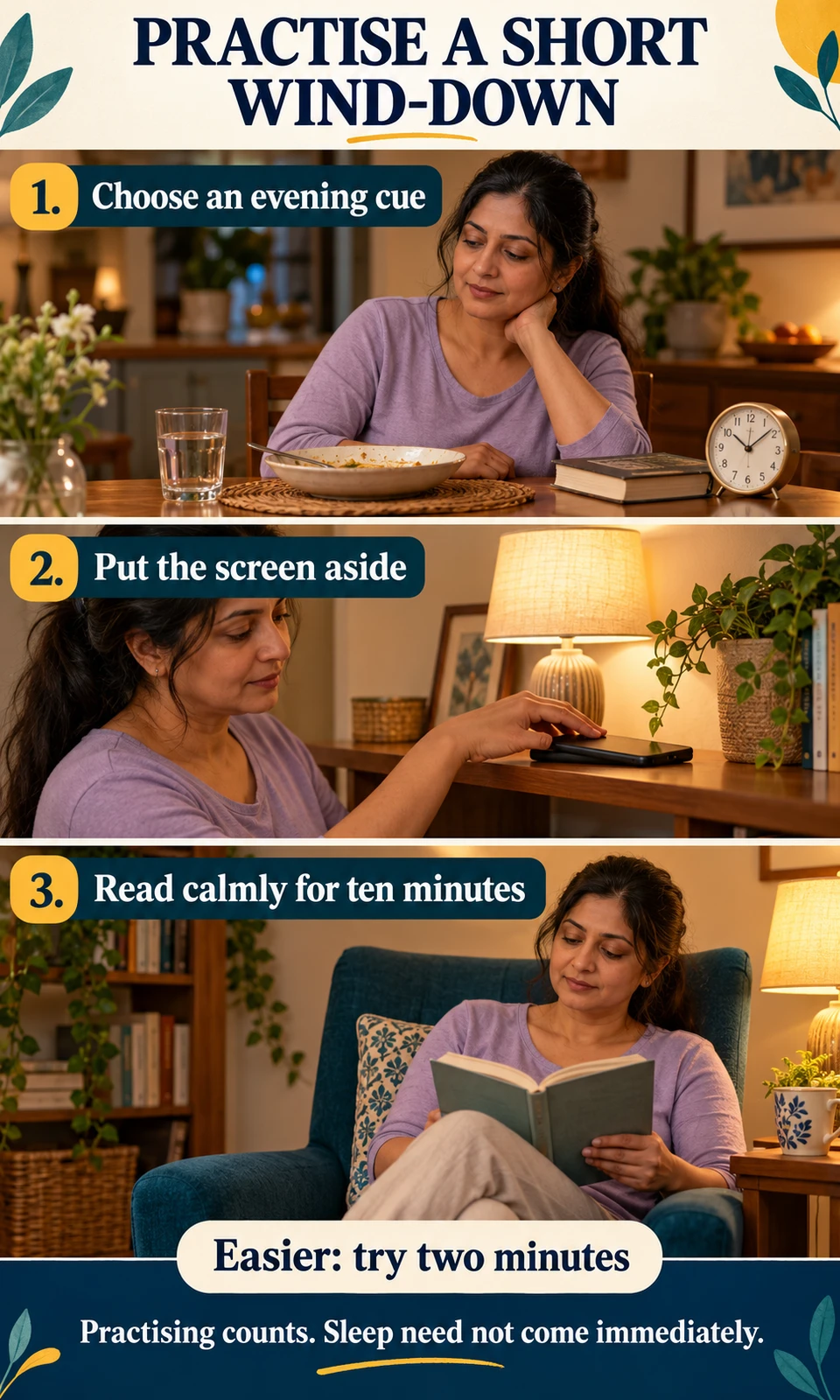
Treat winding down as a routine you can practise, rather than a demand to fall asleep on schedule. NHS sleep guidance supports regular routines and time to relax before bed. The ten-minute example here is an editorial starting point; it is not a guaranteed insomnia treatment or required duration.
- Choose one repeatable wind-down cue. Pick a realistic point in your evening when you can pause for ten minutes. Keep the cue simple, such as finishing the kitchen tidy-up.
- Put the screen aside and soften the light. Use enough light to move safely. Place a book or another calm, non-screen activity nearby.
- Spend the ten minutes on that calm activity. For example, read a few pages while seated comfortably. Completing the pause counts even if you are still awake afterward.
Illustrative example: after dinner, you put the phone on a shelf and read under a lamp for ten minutes. Easier option: try two minutes with the same cue and setup. Repeat a manageable version on another evening; if pain, persistent insomnia or daytime sleepiness keeps disrupting life, ask for assessment rather than making the routine stricter.
Choose your next step in Daily Support Studio
Choose the routine and effort level that fit today, then follow the steps shown. The experience includes an example, an easier version, a completion check and what to try next. It does not diagnose depression, interpret CRP or measure treatment success, and the complete manual methods remain above.

Make today’s step smaller
Daily Support Studio
Choose one manageable routine. See the steps, an easier option and what counts as practice.
Support, not treatment selection. This experience cannot diagnose depression, interpret CRP or promise to reduce inflammation. Your selections stay on this page; the experience does not save or upload them.
A useful step can be small
Choose a routine to see its preparation, three steps, worked example, easier option and next action.
Manual starting points
- Food: choose tolerated ready-to-eat foods, put them on a plate, then sit and eat what you can.
- Movement: check that walking is safe, walk gently within your limits, then stop and rest.
- Wind-down: choose a cue, put the screen aside and try a calm low-light activity.
Practising the action counts even if your mood does not change.
The examples and short timings are editorial adaptations of general self-care guidance, not clinical treatment doses. Seek assessment for persistent, worsening or disabling symptoms.
What the inflammation and depression link actually means
Inflammation is part of the immune response to infection or tissue injury. A short-lived response helps the body respond to a problem, while persistent immune activity may accompany chronic disease. Depression, however, involves mood, interest, thinking, behaviour and functioning; inflammation alone does not define it.
Research comparing groups finds that some people with depression have raised inflammatory markers and others do not. People without depression can also have raised markers. A systematic review of CRP in depression supports a possible inflammatory contribution in a subgroup, with variation that prevents a simple blood-test explanation for everyone.
Researchers are investigating how cytokines, the immune system’s signalling molecules, may affect motivation, reward and stress responses. Proposed pathways include changes in tryptophan metabolism through the kynurenine pathway and effects on reward-related brain circuits. These mechanisms help frame research questions; they cannot be confirmed by noticing fatigue, aches or loss of interest at home.
The relationship can run through several overlapping problems. Illness and pain may disrupt sleep and daily activities, while depression can make routines and treatment harder to maintain. A person with arthritis and low mood may therefore need both physical-health care and depression assessment, even when one problem initially seems to explain the other.
Can a CRP blood test tell me why I feel depressed?
C-reactive protein, or CRP, is made by the liver and can rise with inflammation. A high-sensitivity CRP test measures smaller concentrations of the same protein and has different common clinical uses. Knowing the test name and why it was ordered matters more than comparing a number with a research cut-off.
As MedlinePlus explains about CRP testing, a raised result cannot identify where inflammation is or what caused it. Infection, inflammatory disease and other circumstances can affect the finding. CRP cannot diagnose depression, and a normal result cannot rule depression out.
| Finding | Useful interpretation |
|---|---|
| Raised CRP | Discuss it in the context of the test’s purpose, symptoms and medical history; it does not prove an inflammatory cause of depression. |
| Normal CRP | Depression can still be present; persistent mood symptoms remain worth assessing. |
| Fatigue or aches without a test | Symptoms overlap with many conditions and cannot identify an inflammatory subtype. |
| A cut-off quoted from a study | A research grouping is not a personal rule for diagnosis, supplements or medication. |
If you already have a report, ask the ordering clinician what it changes about the next step. Bring the full result rather than an isolated number, especially if you were unwell when it was taken. Do not order extra inflammatory panels just to complete these daily routines; neither the article nor the experience needs a blood value.
Why reducing inflammation is not a complete treatment plan
Treating a diagnosed inflammatory illness and treating depression may both be necessary. Depression care can include psychotherapy, medication or other options matched to symptoms, history and preferences. Physical-health treatment may help daily functioning, but an improvement in pain or disease activity does not guarantee that depression will resolve.
Anti-inflammatory medicines are being studied, but a promising subgroup finding is not a general recommendation. A randomised infliximab trial in treatment-resistant depression found no overall benefit over placebo, with exploratory biomarker findings requiring further investigation. Do not start aspirin, ibuprofen, steroids or immune-targeting medicines for depression on your own, and discuss prescribed medicine changes with the prescriber.
Everyday support is useful because it makes care and daily life more manageable, not because it proves a particular biological theory. Extreme diets, “detox” programmes and supplement bundles can add work, expense and risk without establishing the cause of low mood. Fatigue also has causes outside the inflammation question; anemia and depression explains an overlap worth discussing with a clinician.
When these steps are not enough
Arrange an assessment when low mood or loss of interest persists for around two weeks, disrupts daily life or becomes difficult to manage. Seek help sooner for severe or worsening symptoms; the duration is not a waiting rule. The NIMH depression guide explains how symptoms, history and functioning guide assessment and treatment.
Seek urgent help if you are thinking about suicide, cannot stay safe or have stopped eating or drinking because of severe symptoms. Contact local emergency or crisis services and involve someone you trust where possible. In the United States, call or text 988; elsewhere use the appropriate local crisis or emergency service.
Frequently asked questions
Does inflammation cause all depression?
No. Inflammation may contribute in a subgroup, while other biological, psychological and social factors can also matter. A group-level association does not identify the cause of an individual’s depression.
Can a normal CRP result rule out depression?
No. CRP is not a depression test. Persistent low mood, reduced interest or disrupted functioning still deserves attention even when a blood result is normal.
Will these routines lower my inflammation?
The routines are offered as practical daily-life support, not a way to lower CRP or treat an inflammatory subtype. Their short timings and worked examples are editorial adaptations of general self-care guidance. Completing a step does not establish a biological change or clinical recovery.
What if the smallest step feels too difficult?
Use the easier option or pause; you can also ask for help with the same step. Difficulty completing it is not proof of failure. If daily needs remain hard to meet, seek support and assessment.
Should I follow an anti-inflammatory diet instead of treatment?
Do not replace prescribed treatment with a diet or supplements without discussing it with your clinician. The easy meal example supports manageable eating, not a restrictive food rule. Keep any dietary advice for your existing health conditions in place.
What if movement makes my illness worse?
Skip the movement routine if it is unsuitable or conflicts with your care advice. Do not push through pain, dizziness, marked exhaustion or worsening symptoms. Ask your clinician about a suitable activity limit and choose a different supportive routine meanwhile.
A practical way forward
You can take a useful daily step without knowing whether inflammation is part of your depression. Choose one routine that is safe, make it small enough to try and let completing the action be the outcome. Keep professional care alongside self-support rather than expecting a meal, walk or wind-down to answer a medical question.