

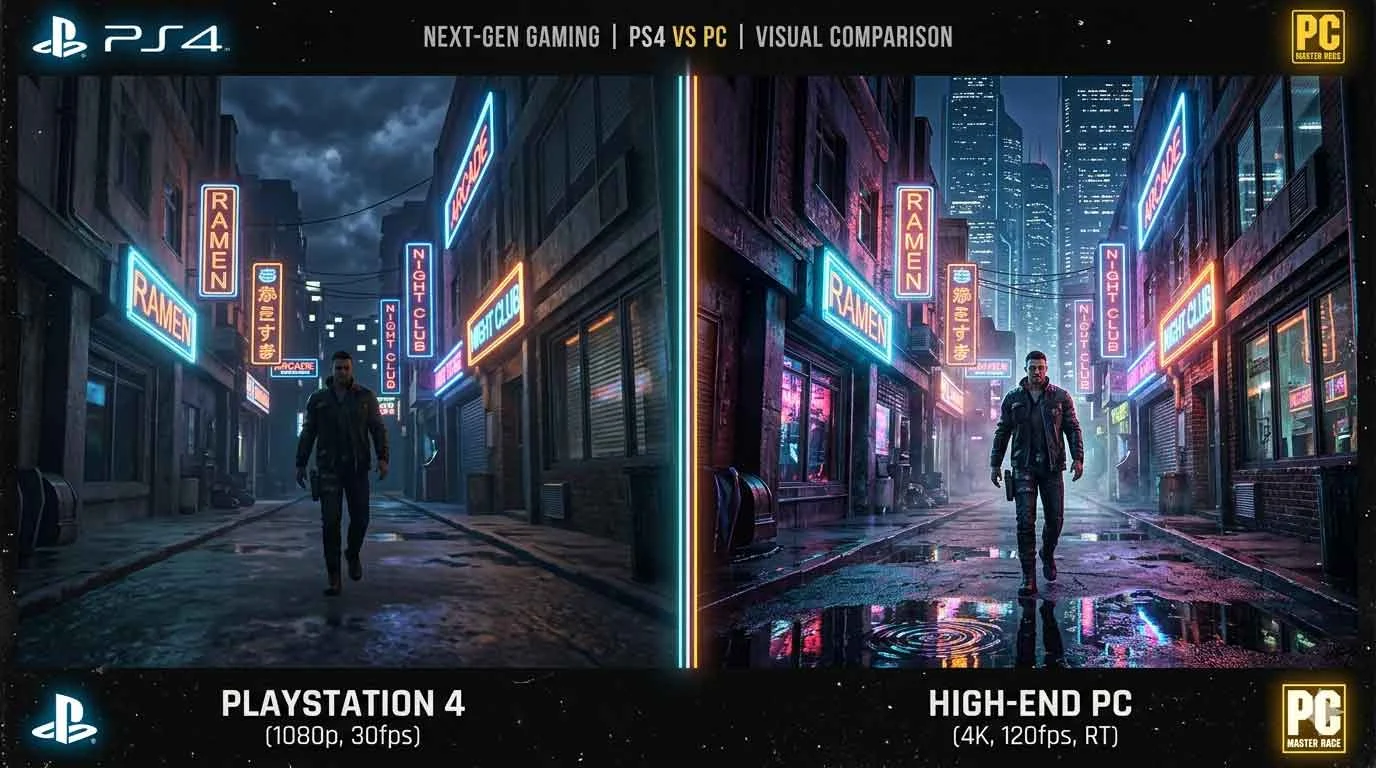

The question of PS4 vs PC graphics refuses to disappear. Even years after the PlayStation 4 launched, people continue to compare it with gaming PCs, not because the answer is unclear, but because the context keeps evolving.
At first glance, the comparison looks simple. One is a fixed hardware console released in 2013. The other is a constantly evolving platform powered by upgradeable components. Yet the debate persists because it is not only about raw power – it is about experience, optimization, accessibility, and long-term performance trajectory.
To understand why this comparison still matters, it is necessary to move beyond surface-level specifications and examine how each platform operates at a structural level.
The Core Difference Most Comparisons Miss
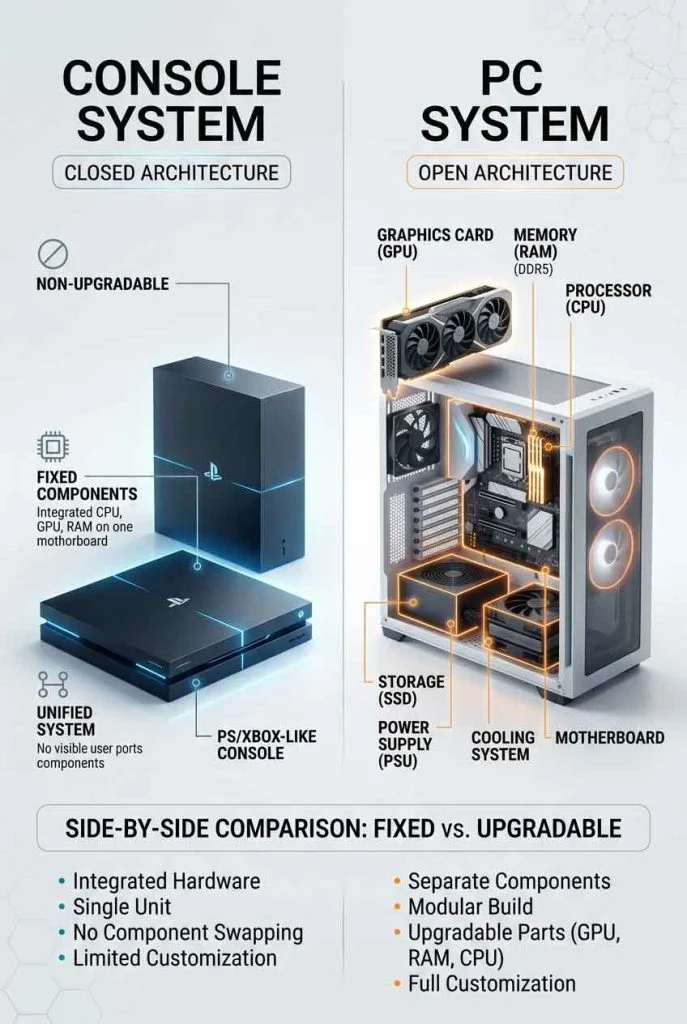
Most discussions start with numbers – GPU teraflops, RAM size, or CPU speed. But these metrics alone fail to explain the actual difference in graphical output.
The real distinction lies in this:
A console is a fixed optimization system.
A PC is an evolving performance system.
This difference reshapes everything that follows.
A PlayStation 4 is designed with a locked hardware configuration. Developers know exactly what hardware they are working with, allowing them to optimize games deeply for that single environment.
A PC, on the other hand, exists across thousands of configurations. Developers must design games to scale across low-end, mid-range, and high-end systems. This flexibility creates variability, but also unlocks a level of performance that consoles cannot reach.
Outright Performance vs Controlled Optimization
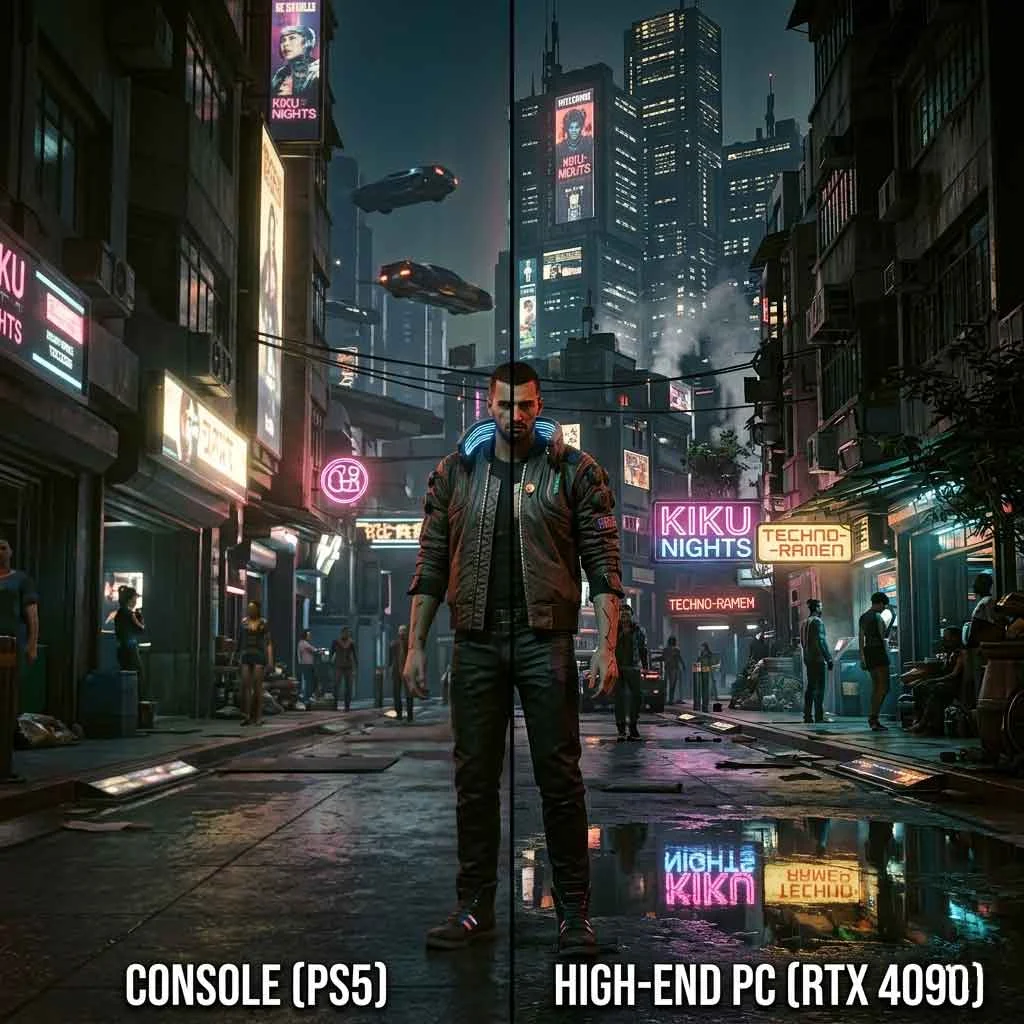
When comparing PS4 vs PC graphics without budget constraints, the gap becomes immediately visible.
A high-end gaming PC can deliver:
- Higher resolution rendering (1440p to 4K and beyond)
- Higher frame rates (60 FPS, 120 FPS, or more)
- Advanced rendering techniques such as ray tracing
- Larger texture sizes and better detail scaling
The PS4, by contrast, operates within fixed limits:
- Typically targets 1080p or dynamic resolution
- Often capped at 30 FPS in demanding titles
- Uses optimized but simplified lighting and texture systems
This does not mean the PS4 produces poor graphics. In fact, many PS4 titles look visually impressive due to tight optimization. However, the ceiling is defined at launch and cannot evolve.
Why Removing Price Changes the Entire Comparison
In earlier comparisons, price was often a key constraint. A PS4 was compared to a PC of similar cost. In that scenario, the console could compete effectively.
But when price is removed, the comparison shifts completely.
A high-end PC graphics card alone can cost as much as or more than an entire console. This investment unlocks significantly higher graphical fidelity.
This is where the comparison stops being equal.
The Upgradeability Factor
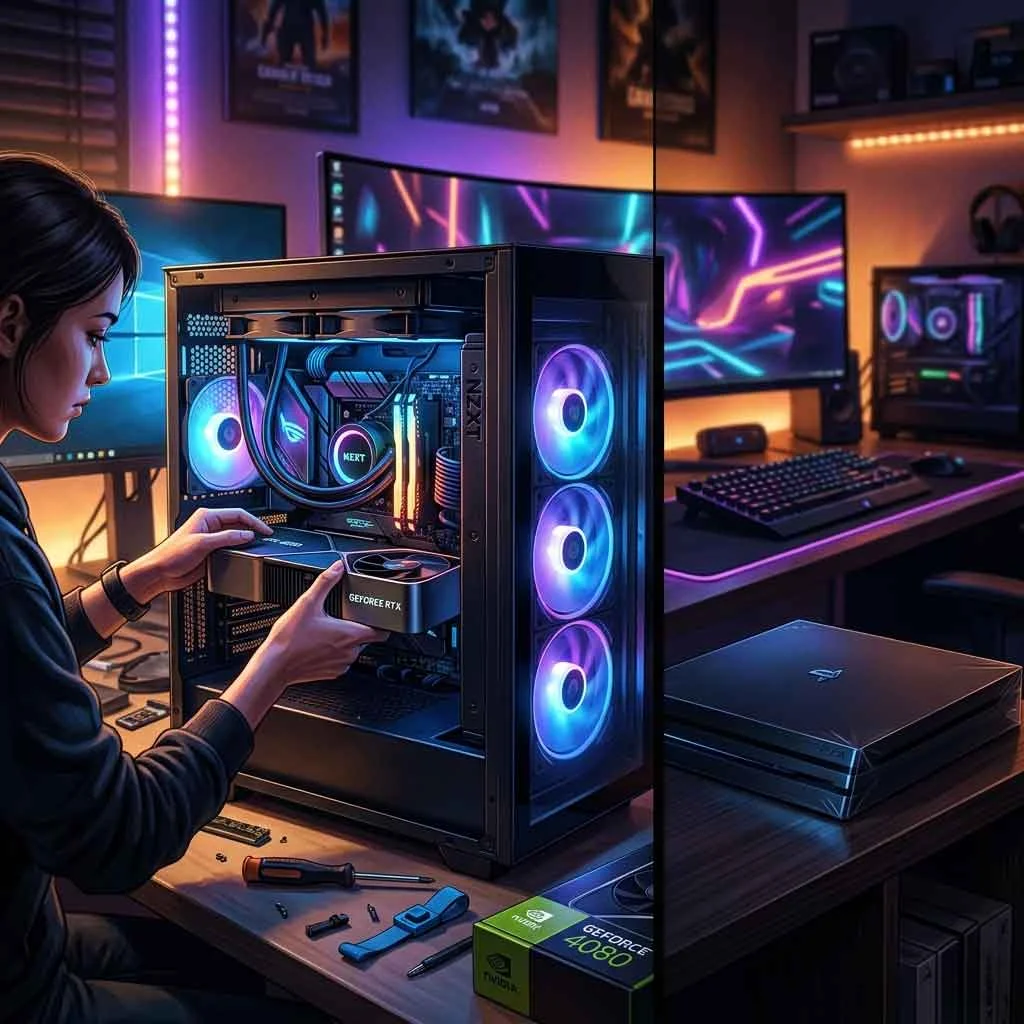
One of the most important structural advantages of PCs is upgradeability.
A gaming PC is not a fixed device. It is a modular system.
- GPU can be replaced
- RAM can be expanded
- Storage can be upgraded
- Cooling systems can be improved
This means a PC can evolve alongside technological advancements.
A PS4 cannot.
Once released, its hardware remains unchanged throughout its lifecycle. Developers may optimize better over time, but the underlying performance ceiling does not move.
Why This Matters Over Time
At launch, the PS4 was competitive within its price range.
But as years pass:
- New GPUs become significantly more powerful
- Rendering techniques improve
- Game engines evolve
A PC user can adopt these improvements immediately through upgrades.
A PS4 user cannot.
This creates a widening gap over time rather than a static difference.
Power, Heat, and Practical Constraints
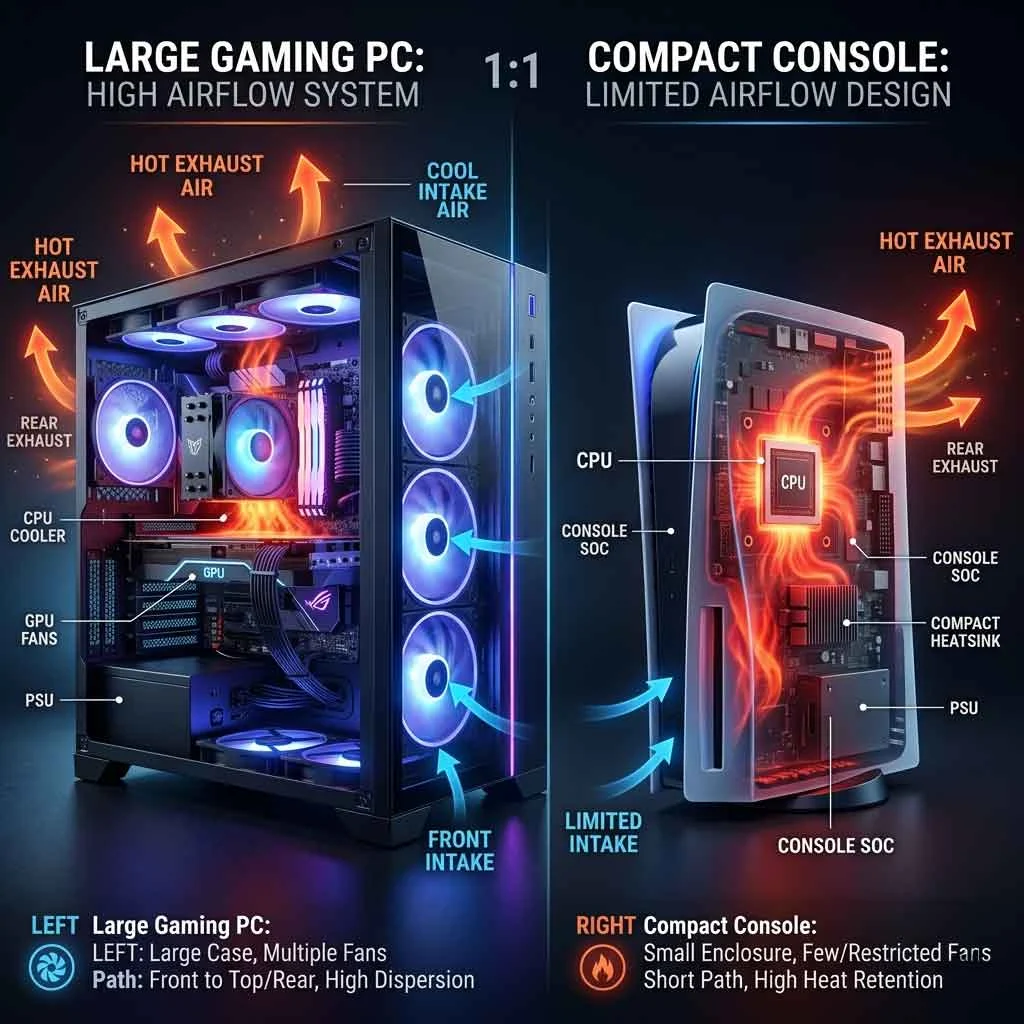
Another critical factor often overlooked is power consumption.
A high-end gaming PC can draw:
- 600W to 1000W power supply capacity
This allows for:
- Larger GPUs
- More aggressive cooling
- Higher sustained performance
By comparison, a PS4 operates around:
- ~150W to 300W total system power
This constraint exists for practical reasons:
- Heat management in a compact form
- Noise reduction for living room environments
- Energy efficiency expectations
If a console attempted to match high-end PC power, it would become:
- Larger
- Noisier
- More expensive
- Less practical for mass adoption
The Business Model Behind the Hardware
Console hardware is not just an engineering decision. It is a business model.
A console must:
- Be affordable at launch
- Sell in large volumes
- Operate reliably in typical home environments
A high-end gaming PC does not follow these constraints.
It is a niche market:
- Higher cost
- Custom builds
- Enthusiast-driven upgrades
This explains why consoles are designed with balanced performance rather than maximum performance.
Why PS4 Graphics Still Impress
Despite these limitations, the PS4 still delivers visually strong games.
This is due to optimization efficiency.
Developers can:
- Fine-tune rendering pipelines
- Use custom techniques tailored to hardware
- Optimize memory usage aggressively
This results in games that look better than their raw specifications suggest. This is similar to how users begin to understand visual clarity differences, where improved rendering precision directly enhances perception and engagement.
The Hidden Strength of Consoles
Because every PS4 is identical, developers can extract maximum efficiency.
On PC, developers must account for variability.
This leads to:
- Less aggressive optimization
- More general-purpose rendering solutions
Ironically, this means a well-optimized PS4 game can sometimes outperform a poorly optimized PC version running on similar hardware levels.
The Real Question Behind the Comparison
The PS4 vs PC graphics debate is not actually about which is better.
It is about:
- Predictability vs flexibility
- Optimization vs scalability
- Fixed experience vs evolving performance
Once framed this way, the comparison becomes clearer.
Where the Gap Becomes Impossible to Ignore
At the highest end of performance, the difference becomes undeniable.
Modern PCs can deliver:
- Real-time ray tracing
- Ultra-high-resolution textures
- Advanced physics simulations
- AI-enhanced rendering techniques
These are not incremental improvements. They represent a different tier of graphical capability.
The PS4, by design, cannot reach this level.
The Hardware Architecture That Shapes Everything
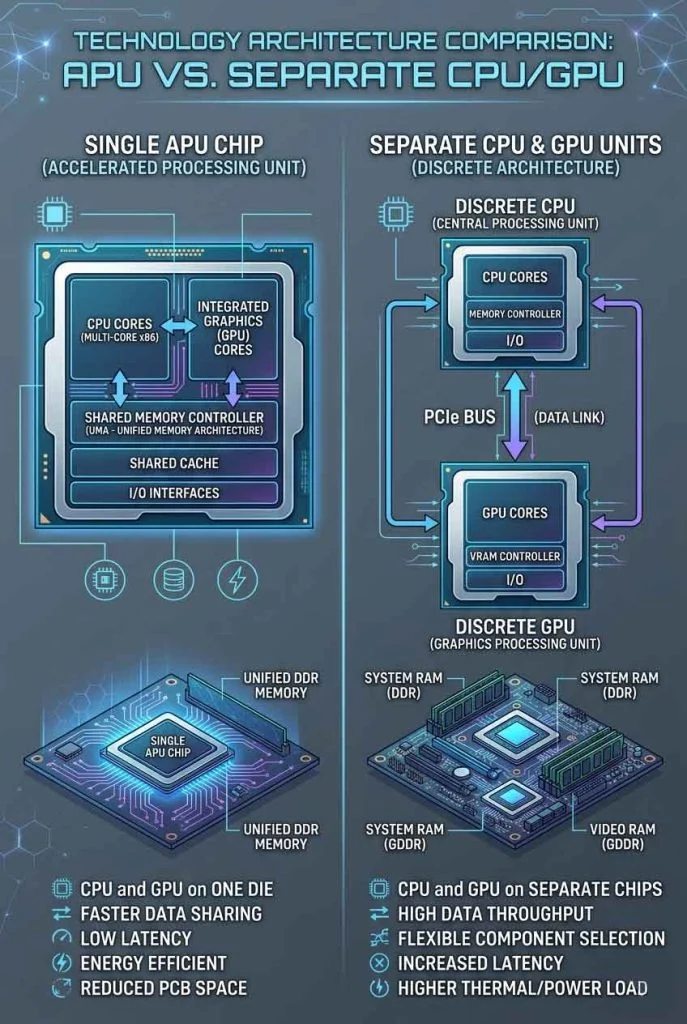
To understand PS4 vs PC graphics at a deeper level, the discussion must move into architecture, not just performance numbers.
The PlayStation 4 is built around a semi-custom APU developed by AMD. This APU combines both CPU and GPU into a single chip using the GCN (Graphics Core Next) architecture.
This design prioritizes:
- Efficiency
- Cost control
- Unified memory access
- Consistent performance across all units
A gaming PC, by contrast, typically separates these components:
- CPU (central processing unit)
- GPU (dedicated graphics card)
- Independent memory systems
Modern GPUs from NVIDIA and AMD operate as standalone high-performance units, often exceeding the total capability of an entire console system.
This architectural difference is the foundation of the performance gap.
Fixed Pipeline vs Scalable Pipeline
The PS4 operates within a fixed rendering pipeline constraint.
Developers optimize specifically for:
- One GPU architecture
- One memory bandwidth profile
- One CPU limitation
This allows for deep optimization, but it also locks the system into a fixed capability ceiling.
A PC, however, operates within a scalable pipeline model.
Game engines are built to scale across:
- Entry-level GPUs
- Mid-range hardware
- High-end enthusiast systems
This scalability allows modern PCs to adopt new rendering techniques rapidly without being constrained by legacy hardware limitations.
What a Rendering Pipeline Actually Does
A rendering pipeline determines how a game scene is processed into a final image.
It includes stages such as:
- Geometry processing
- Lighting calculations
- Texture mapping
- Post-processing effects
On PS4, this pipeline is optimized tightly to maximize efficiency within limits.
On PC, the pipeline can expand dynamically based on hardware capability.
This flexibility is what enables:
- Ray tracing
- Real-time global illumination
- Advanced anti-aliasing techniques
Memory Architecture and Its Impact on Visual Fidelity
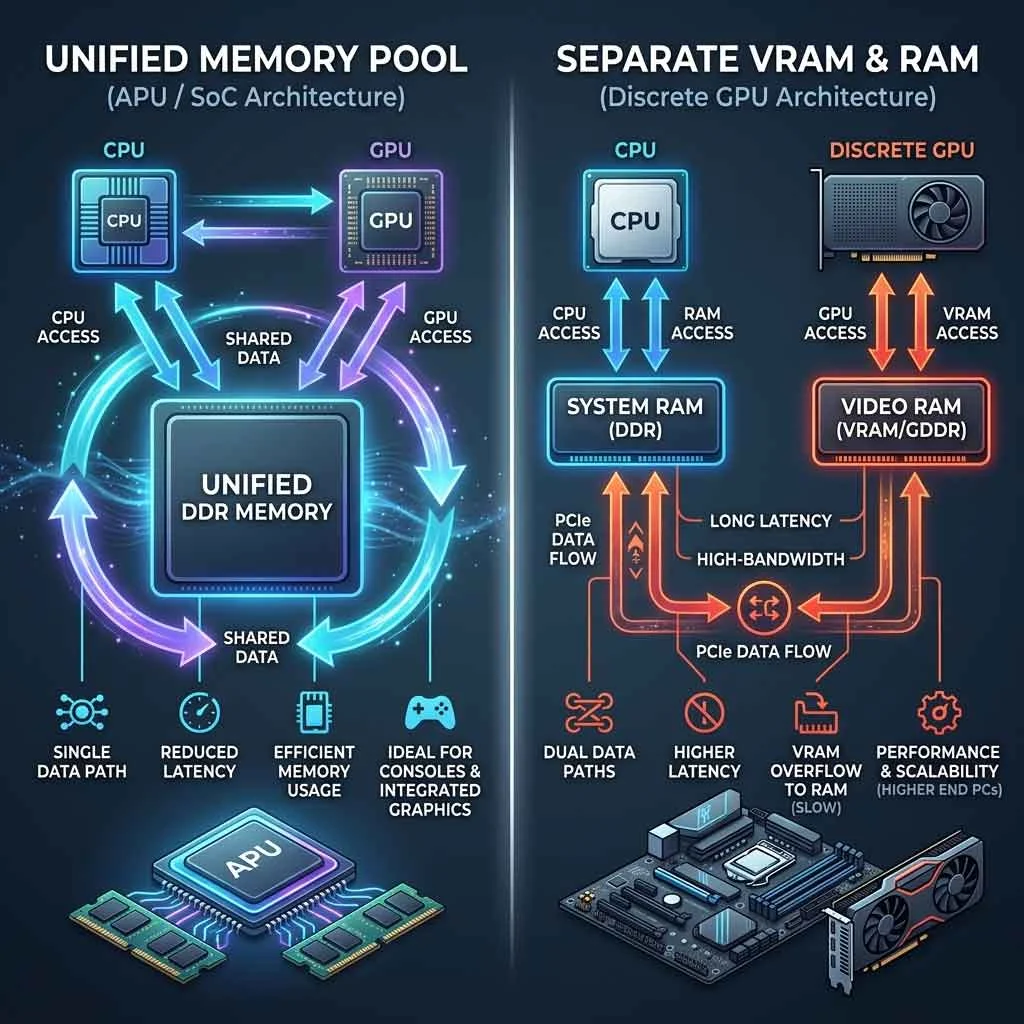
Memory is one of the most underestimated factors in graphics performance.
The PS4 uses:
- 8GB of GDDR5 unified memory
This means CPU and GPU share the same memory pool.
Advantages:
- Faster data access between components
- Simplified optimization
Limitations:
- Fixed capacity
- Shared resources reduce available memory for textures
A gaming PC, on the other hand, uses:
- Dedicated VRAM on the GPU
- Separate system RAM
This separation allows:
- Larger texture sizes
- More complex scene data
- Higher resolution assets
Why Texture Quality Differs So Much
Texture resolution is one of the most visible differences between PS4 and PC graphics.
On PC:
- Ultra settings can use significantly larger textures
- More detailed surfaces and environments are possible
On PS4:
- Texture resolution must be optimized to fit within memory limits
- Developers often compress textures more aggressively
This is why PC visuals often appear sharper and more detailed, especially at higher resolutions.
Frame Rate Stability and Visual Fluidity
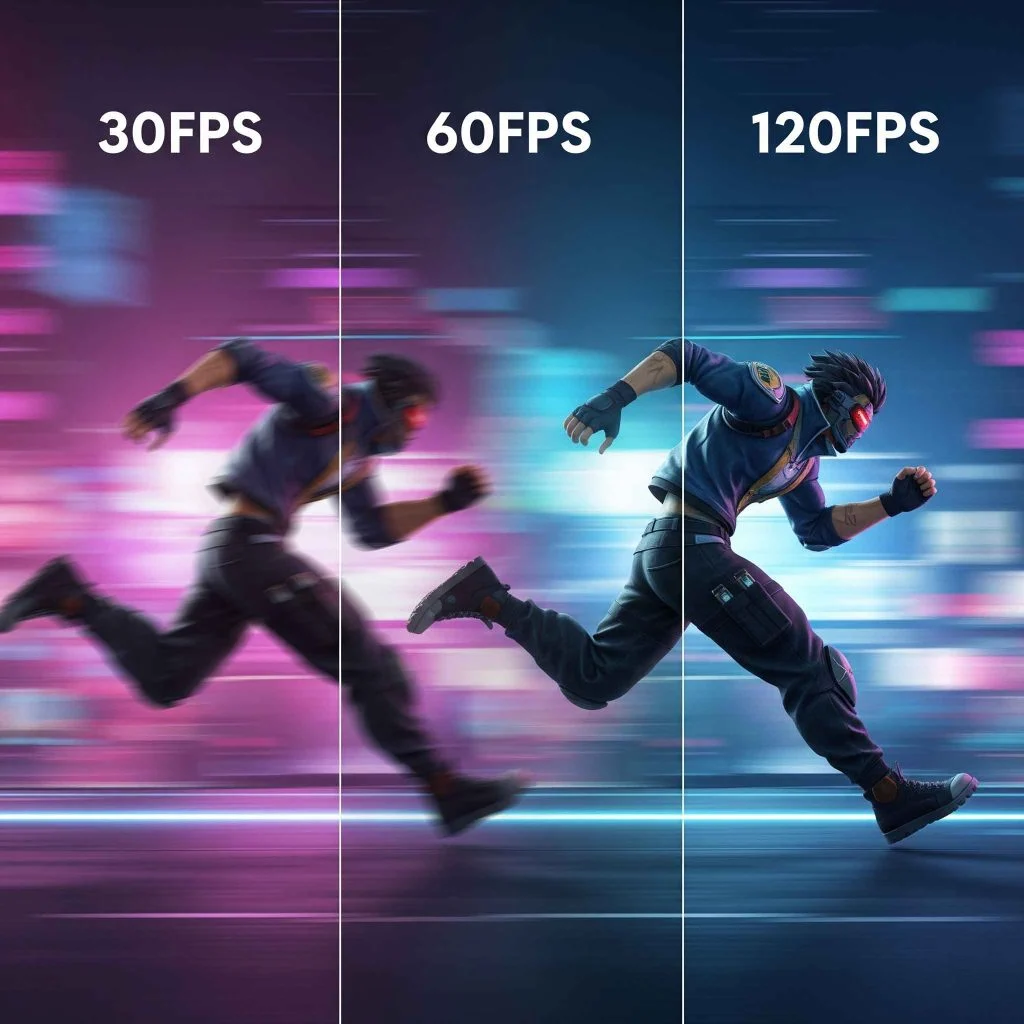
Graphics quality is not only about how things look, but also how smoothly they move.
PS4 games often target:
- 30 frames per second (FPS)
Some optimized titles reach:
- 60 FPS
PC gaming systems can reach:
- 60 FPS, 120 FPS, or higher depending on hardware
Higher frame rates result in:
- Smoother motion
- Lower input latency
- More responsive gameplay
Why Frame Rate Is a Structural Limitation
Frame rate is tied directly to hardware capability.
Because the PS4 hardware is fixed, developers must balance:
- Visual quality
- Frame rate
Often, visual quality is prioritized, leading to lower frame rates.
On PC, users can choose:
- Higher frame rate with reduced settings
- Maximum visual quality with powerful hardware
On PC, users can choose higher frame rate with reduced settings or maximum visual quality with powerful hardware. This flexibility is not available on consoles. This reflects how systems differ in processing decisions similar to on-device AI vs cloud AI architecture, where flexibility and scalability define performance boundaries.
The Role of Game Engines in Expanding the Gap
Modern game engines play a significant role in widening the difference between PS4 and PC graphics.
Engines such as Unreal Engine and Unity are designed with scalability in mind.
They support:
- Advanced lighting models
- High-resolution assets
- Hardware acceleration features
As these engines evolve, they increasingly target newer hardware capabilities that older consoles cannot support.
Engine Evolution vs Console Lifespan
Game engines evolve continuously.
Consoles remain static.
This mismatch creates a growing gap:
- New engine features push graphical boundaries
- Older hardware struggles to keep up
Over time, developers must:
- Reduce features for console versions
- Limit graphical fidelity to maintain performance
Real-World Example – Same Game, Different Output
Consider a modern game running on both platforms.
On PS4:
- Lower resolution rendering
- Simplified lighting
- Reduced draw distance
- Lower texture quality
On PC (high-end system):
- Native 4K resolution
- Ray-traced lighting
- Extended draw distance
- Ultra textures
The difference is not subtle. It is structural.
Visual Semantic Diagram – Rendering Pipeline Comparison
Explanation
The diagram above represents how rendering pipelines differ:
Console Pipeline:
- Fixed optimization
- Limited scalability
- Highly efficient but capped
PC Pipeline:
- Dynamic scalability
- Advanced rendering stages
- Expands with hardware improvements
This difference explains why PCs can adopt new graphical technologies faster.
Ray Tracing – The Turning Point
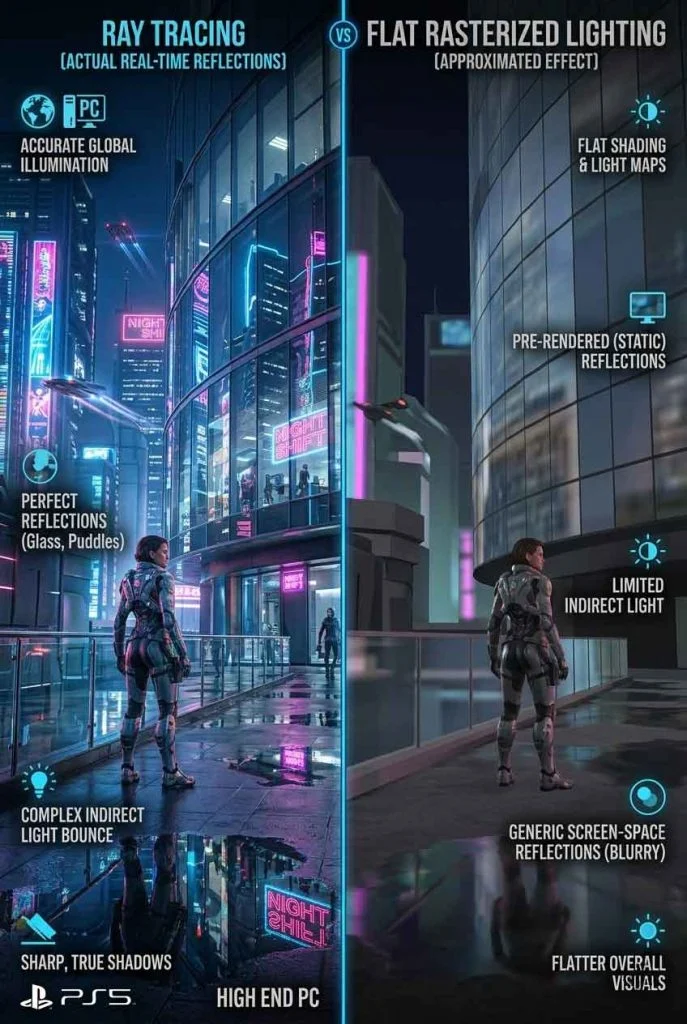
One of the biggest shifts in modern graphics is ray tracing.
Ray tracing simulates how light behaves in real life:
- Reflections
- Shadows
- Global illumination
Modern GPUs from NVIDIA and AMD support real-time ray tracing.
The PS4 does not.
This creates a clear generational divide in graphical capability.
Why Ray Tracing Changes Everything
Traditional rendering uses approximations.
Ray tracing calculates:
- Accurate light paths
- Realistic reflections
- Natural shadow behavior
This results in:
- More immersive environments
- Higher visual realism
Without hardware support, consoles like the PS4 cannot fully implement these techniques.
Why the Gap Keeps Growing
The gap between PS4 and PC graphics is not static. It expands over time.
This happens because:
- PC hardware evolves continuously
- New GPUs introduce new capabilities
- Game engines adopt these capabilities
Meanwhile:
- The PS4 hardware remains unchanged
- Developers must optimize within fixed limits
The Compounding Effect
Each year adds:
- More powerful GPUs
- More advanced rendering techniques
- Higher expectations for visual fidelity
This creates a compounding effect where:
The gap widens faster than it initially appeared.
Expertise Reinforcement – Why Consoles Cannot Catch Up
From a structural perspective, it is not realistic for a console like the PS4 to match high-end PC graphics.
Key limitations include:
- Fixed hardware lifecycle
- Power and heat constraints
- Cost limitations
- Mass-market usability requirements
These are not temporary constraints. They are design decisions.
What This Means for Users
The comparison ultimately reflects two different priorities:
Console (PS4):
- Consistency
- Ease of use
- Cost efficiency
PC:
- Maximum performance
- Customization
- Long-term scalability
Understanding this distinction removes confusion from the comparison.
What Happens in Real Games – Not Theory
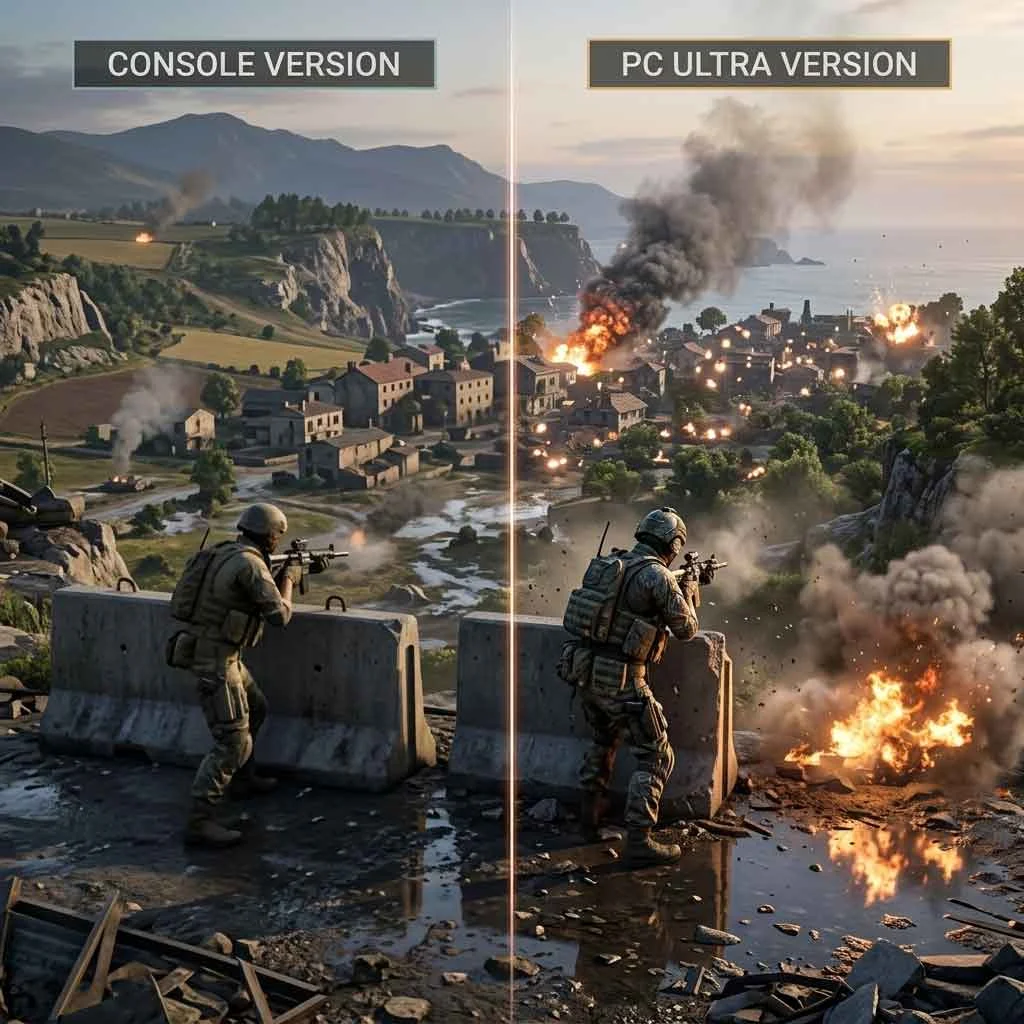
Theoretical comparisons are useful, but the real difference between PS4 and PC graphics becomes clearer when observing actual games in real-world conditions.
A title such as Battlefield 4 demonstrates this clearly.
On PS4:
- Resolution often runs at 900p to 1080p
- Frame rate targets 60 FPS but can fluctuate
- Texture quality is optimized but limited
- Lighting uses precomputed techniques
On PC (high-end system):
- Native 1080p, 1440p, or 4K resolution
- Stable or higher frame rates
- Higher texture filtering and detail
- More advanced lighting and post-processing
The experience is not just sharper – it is more consistent and scalable.
Open-World Games Reveal the Biggest Differences
Large-scale environments highlight the gap even more.
Games such as The Witcher 3: Wild Hunt show:
On PS4:
- Reduced draw distance
- Fewer environmental details
- Lower foliage density
On PC:
- Extended draw distance
- More objects rendered simultaneously
- Higher environmental complexity
These differences affect how immersive the world feels.
Resolution vs Perceived Quality
Many comparisons focus heavily on resolution.
However, resolution alone does not define visual quality.
Other factors include:
- Texture detail
- Lighting accuracy
- Shadow quality
- Post-processing effects
A PC running at ultra settings combines all these elements, while the PS4 must balance them within limits.
Why Higher Resolution Alone Is Not Enough
A 4K image with low-quality textures can still look less detailed than a lower resolution image with high-quality assets.
This is why PC graphics often appear superior even beyond resolution differences.
The Cost Reality – Why PCs Can Do More
One of the most important but often overlooked aspects is cost structure.
A PS4 was designed to:
- Be affordable for mass adoption
- Deliver consistent performance
- Operate efficiently in a home environment
A gaming PC, especially a high-end one, follows a different model.
- Higher upfront cost
- Component-level investment
- Continuous upgrade path
A single modern GPU can cost as much as or more than an entire console.
Why This Creates a Structural Advantage
Because cost is not tightly constrained in the PC market:
- Hardware can push boundaries
- Performance can scale indefinitely
- Innovation is adopted faster
This is not possible within the console business model.
Lifecycle Comparison – Fixed vs Evolving Systems
The lifecycle of a PS4 is fixed.
- Hardware remains unchanged for years
- Performance improvements rely on optimization
- Developers adapt to constraints
The lifecycle of a PC is dynamic.
- Hardware evolves continuously
- Users upgrade individual components
- Performance scales with investment
The Compounding Gap Over Generations
When the PS4 launched, the gap between console and PC was noticeable but manageable.
Years later:
- PC hardware has advanced significantly
- New graphical techniques have emerged
- Game engines have evolved
The result is a widening gap that becomes more pronounced over time.
Common Misconceptions in the PS4 vs PC Debate
Misconception 1 – Consoles Are Equivalent to Mid-Range PCs
At launch, this comparison can be reasonable.
Over time, it becomes inaccurate because:
- PC hardware improves rapidly
- Console hardware remains static
Misconception 2 – Optimization Makes Consoles Equal to PCs
Optimization helps consoles perform efficiently, but it does not remove hardware limitations.
It can:
- Improve stability
- Enhance visual output within limits
It cannot:
- Introduce new hardware capabilities
- Match high-end GPU performance
Misconception 3 – Graphics Are the Only Difference
Graphics are only one part of the experience.
Other differences include:
- Modding capabilities
- Input customization
- Software ecosystem flexibility
These factors also influence the overall gaming experience.
Expertise Reinforcement – Limitations and Trade-Offs
To fully understand the comparison, it is important to acknowledge trade-offs.
Console Strengths
- Consistent experience
- Lower cost entry
- Simplicity and accessibility
- Optimized game performance
PC Strengths
- Maximum graphical performance
- Upgrade flexibility
- Higher frame rate potential
- Advanced rendering capabilities
Trade-Off Summary
Consoles sacrifice flexibility for consistency.
PCs sacrifice simplicity for performance.
Final System Understanding – Not Competition, But Design Philosophy
The PS4 vs PC graphics comparison is often framed as a competition.
In reality, it reflects two different design philosophies:
Console Design Philosophy:
- Controlled environment
- Predictable performance
- Mass-market accessibility
PC Design Philosophy:
- Open ecosystem
- Performance scalability
- Continuous evolution
Once viewed through this lens, the comparison becomes clearer and more meaningful.
Conclusion
The PS4 delivers impressive graphics within its design constraints.
However, the PC platform operates without those constraints.
This leads to:
- Higher performance ceilings
- Continuous graphical evolution
- Adoption of new technologies
The gap between PS4 and PC graphics is not just about power.
GPU Performance Estimator
Estimate expected FPS, visual quality tier, and recommended settings for popular PC games.
See expected results
Choose your game, GPU, RAM, CPU tier, and resolution to generate an estimate.
It is about structure, flexibility, and long-term scalability.
FAQs
Is PS4 graphics still good compared to PC?
PS4 graphics are still visually strong due to optimization, but they cannot match the scalability and advanced rendering capabilities of modern gaming PCs.
Why do PCs have better graphics than PS4?
PCs have upgradeable hardware, more powerful GPUs, and higher power capacity, allowing them to deliver higher resolutions, frame rates, and advanced rendering technologies.
Can PS4 ever match PC graphics?
No, because PS4 hardware is fixed and cannot evolve, while PC hardware continuously improves over time, creating an expanding performance gap.
Does optimization make PS4 equal to PC?
Optimization improves console performance efficiency, but it cannot overcome hardware limitations or match high-end PC graphics capabilities.