
For a baked potato in the oven, scrub and dry a russet, prick it, coat it lightly with oil and salt, then bake it unwrapped at 425°F / 220°C. Start checking around 50 minutes; many finish in 50–60 minutes, but a large potato can need longer. Stop when the thickest center is tender, then split and fluff it as soon as it is safe to handle.
| Checkpoint | Starting guide | What decides the next step |
|---|---|---|
| Potato | Whole russet; choose similar sizes | A thicker potato takes longer to heat through. |
| Oven | 425°F / 220°C conventional setting | Preheat before loading; fan ovens may need their manual’s conversion. |
| Time | Start checking around 50 minutes | Continue only while the center resists; the timer is not proof of doneness. |
| Skin | Dry, lightly oiled and unwrapped | Foil traps moisture and softens the skin. |
| Leftovers | Prompt refrigeration; reheat to 165°F / 74°C | Safe storage and reheating are separate from first-bake texture. |
What temperature and potato size work best for oven baking?
Use 425°F / 220°C in a conventional oven as the starting setting for this method, and select whole russets of similar size. The Idaho Potato Commission’s basic oven recipe uses 425°F and a 50–60-minute tenderness check. Those minutes are a guide for planning dinner, rather than a promise for every potato and oven.
Size changes the journey from hot skin to a cooked center. A thick potato gives heat farther to travel, so its outside can look ready before its middle softens. Matching sizes reduces that difference across a batch, although each potato still needs its own check.
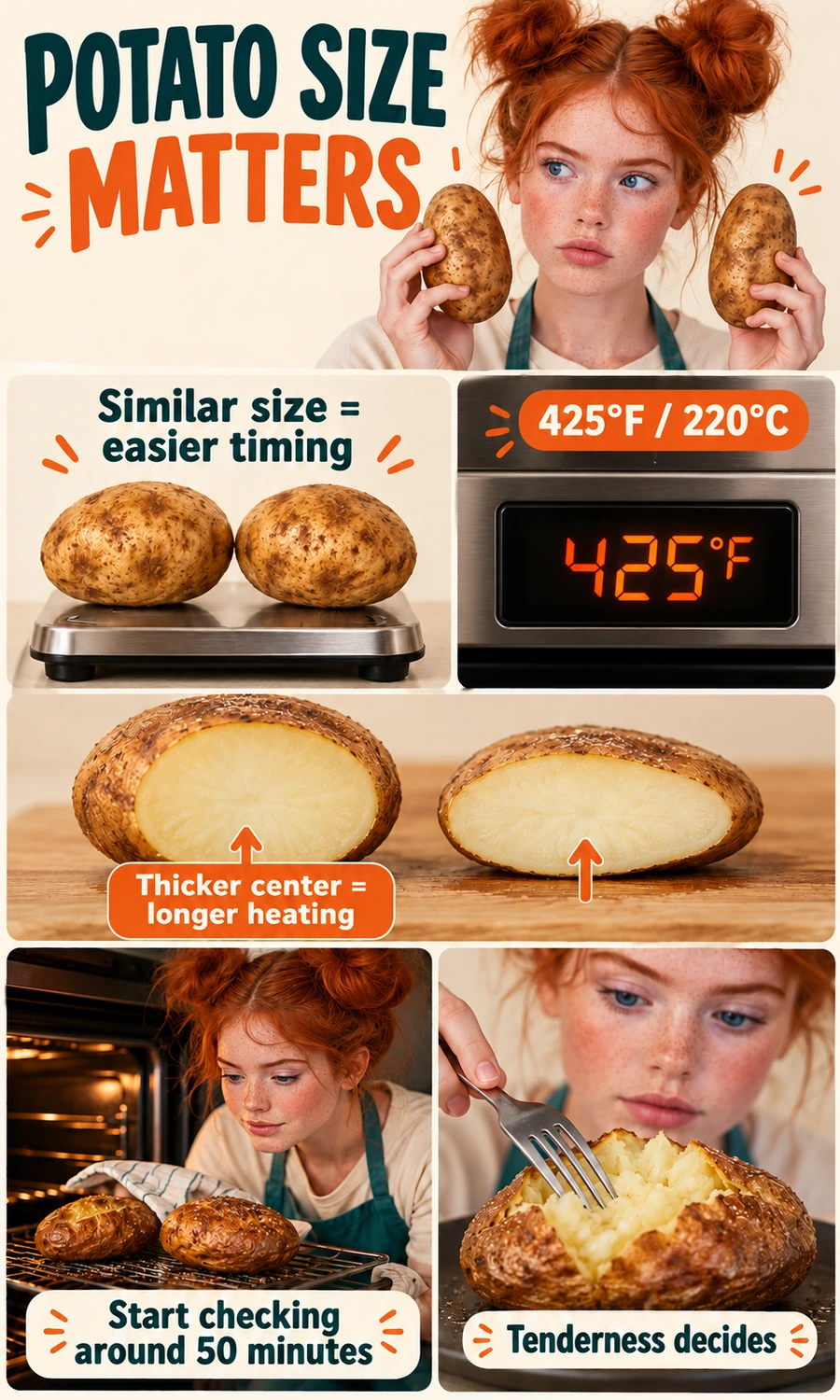
A russet is a practical choice for a loose, fluffy interior because it belongs to the high-starch, lower-moisture group described in Kansas State University’s potato selection guidance. Gold and red potatoes can still be baked, but their flesh is generally creamier or firmer. Choose by the texture you want rather than expecting every variety to open like a russet.
Ingredients and equipment for two servings
- 2 sound, medium russet potatoes of similar size; roughly 225–280 g each is a shopping guide, not a timing formula.
- About 1 teaspoon oil in total, or only enough for a thin film; salt to taste.
- Fork, vegetable brush, clean towel, oven-safe tray and optional oven-safe wire rack.
- Oven mitts, a thin skewer or small knife, and an optional instant-read thermometer.
- Optional toppings: butter, plain yogurt, grated cheese, chives or ready-to-eat beans.
Start with firm, sound potatoes without decay or green areas. The NHS potato safety advice cautions against eating green, damaged or sprouting parts, so choose better potatoes for this whole-skin recipe. Wash produce under running water, as explained in FoodSafety.gov’s clean-food guidance; soap is unnecessary.
Prepare the whole potato
- Scrub: rinse under running water and brush away visible dirt.
- Dry: pat the whole surface thoroughly with a clean towel.
- Prick: pierce the skin 2–3 times with a fork; keep the potato whole.
- Season: rub on a thin film of oil and add salt to taste. Avoid leaving oil pooling on the tray.

The dry surface helps the skin reach the crisp texture you are aiming for. Fork holes give steam a route out, while a light coating seasons the outside without soaking it. If speed matters more than skin texture, the separate microwave baked potato guide owns that faster, softer-skinned approach.
How do you bake a potato with crisp skin instead of steamed skin?
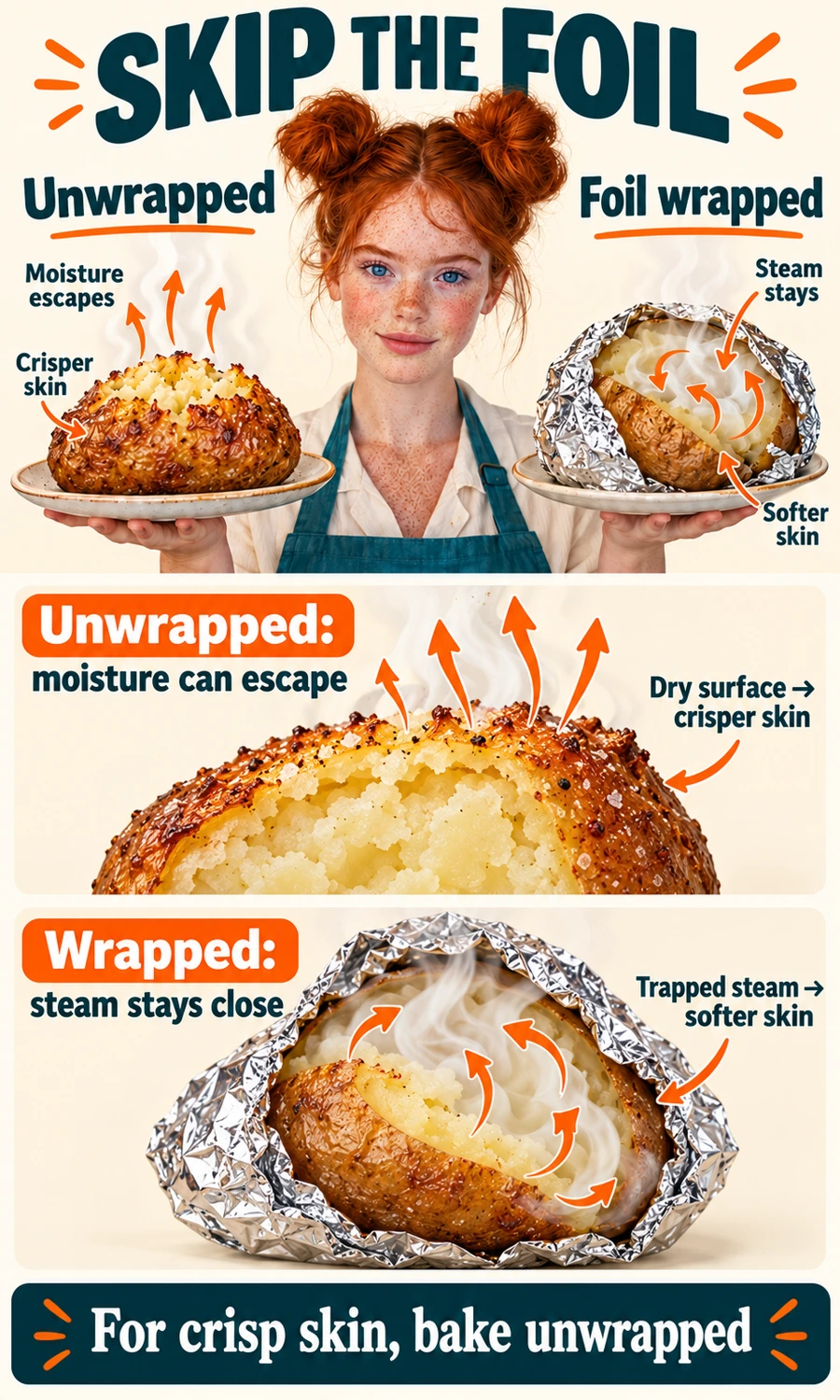
For crisp skin, bake the potato unwrapped with room around it. Foil is useful for some cooking jobs, but it traps moisture against a whole potato and produces a softer surface. The Idaho Potato Commission’s foil comparison distinguishes this steamed result from an unwrapped baked potato.
Think of crispness as a surface-drying job that runs alongside the center-cooking job. Moisture must leave the skin while heat works inward; wrapping the potato changes the first process more than it solves the second. Oil does not cancel the moisture trapped by foil, and adding more oil is not a reliable cure for soggy skin.
Bake the prepared potatoes
- Preheat: set the conventional oven to 425°F / 220°C and position a shelf in the middle.
- Load: place the prepared potatoes on an oven-safe wire rack over a tray, leaving gaps. A plain baking tray is also acceptable; its contact side may have a different texture.
- Bake: keep the potatoes whole and unwrapped. Begin checking around 50 minutes; many medium potatoes take about 50–60 minutes.
- Continue if firm: use the center test in the next section. Return a resistant potato to the oven and check again after a short interval, roughly 5–10 minutes.
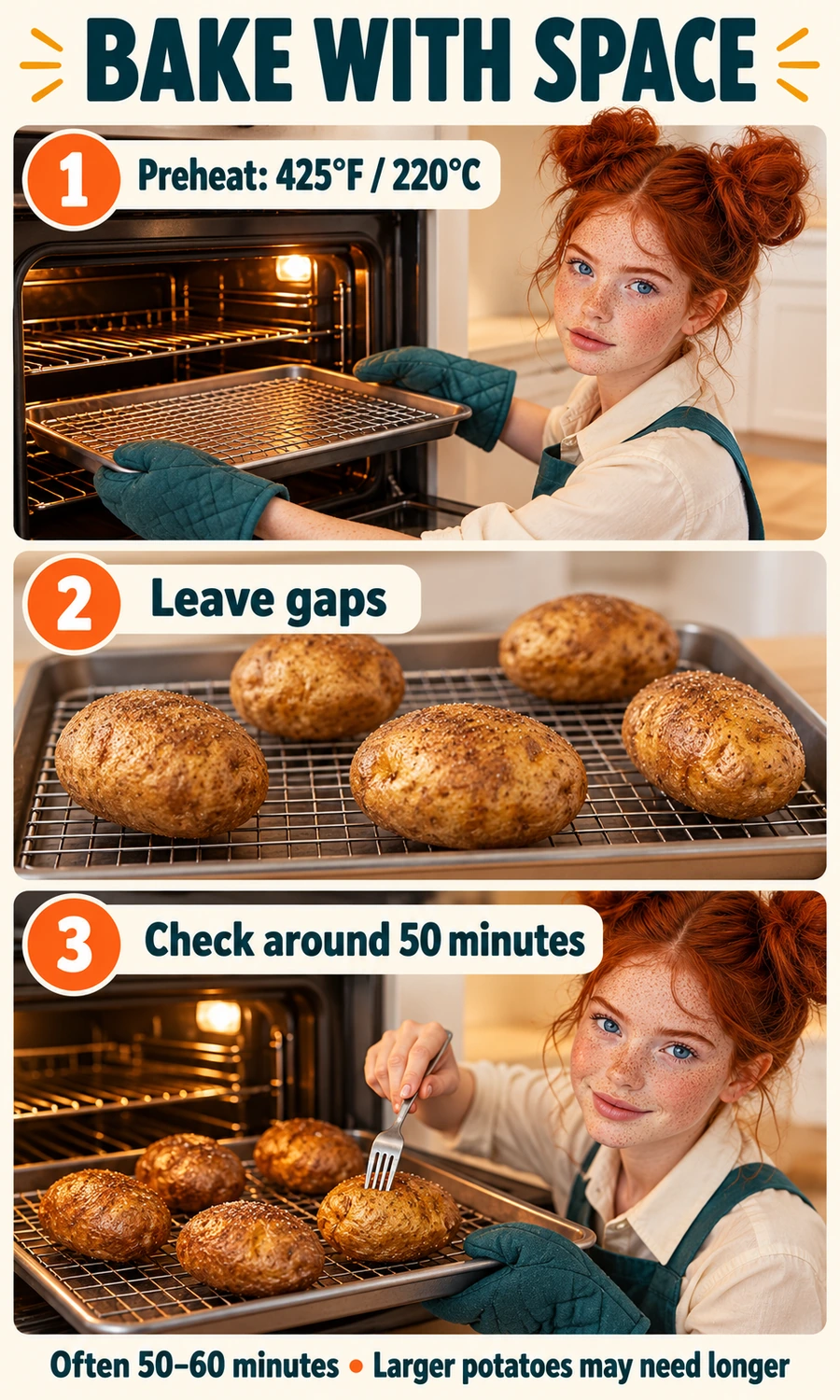
The rack-over-tray arrangement is a practical way to expose more skin to circulating heat while catching drips. Use only equipment rated for oven temperatures, and leave enough clearance for safe removal. For a batch, increase the number of potatoes only while they fit with gaps; do not multiply cooking time by the serving count.
A fan or convection oven can finish sooner than a conventional oven, so its instructions matter. Follow the appliance manual if it converts conventional recipes to a lower setting or changes the cooking programme. There is no universal fan-oven minute deduction, and repeatedly opening the door makes an already variable estimate less useful.
| Problem | Likely explanation | What to change |
|---|---|---|
| Soft skin | Foil, damp preparation or trapped moisture | Dry thoroughly and bake unwrapped with space. |
| Dark outside, firm center | Heat is too aggressive for that potato or oven | Check the setting and calibration; avoid raising heat just to meet a deadline. |
| One potato done first | Different thickness or placement | Remove it once tender; test the others separately. |
| Dry, hollow-feeling interior | The potato continued cooking after it was ready | Use center checks and stop earlier next time; extra heat will not restore lost moisture. |
How can you tell the potato is done and open it without losing fluffiness?
The potato is ready when a thin skewer or knife tip slides easily into the thickest center without a firm core. A browned skin, a warm surface or an elapsed hour cannot establish that on its own. Test the center of each potato rather than assuming the biggest and smallest finished together.
As the flesh heats, its starch and cell structure change, turning a firm raw interior into a tender one. Russets then separate into a lighter texture when opened and gently loosened. The Idaho Potato Commission’s doneness guidance gives about 210°F / 99°C in the center as an optional texture checkpoint; it is not the same rule as reheating leftovers to 165°F / 74°C.
Check, open and serve
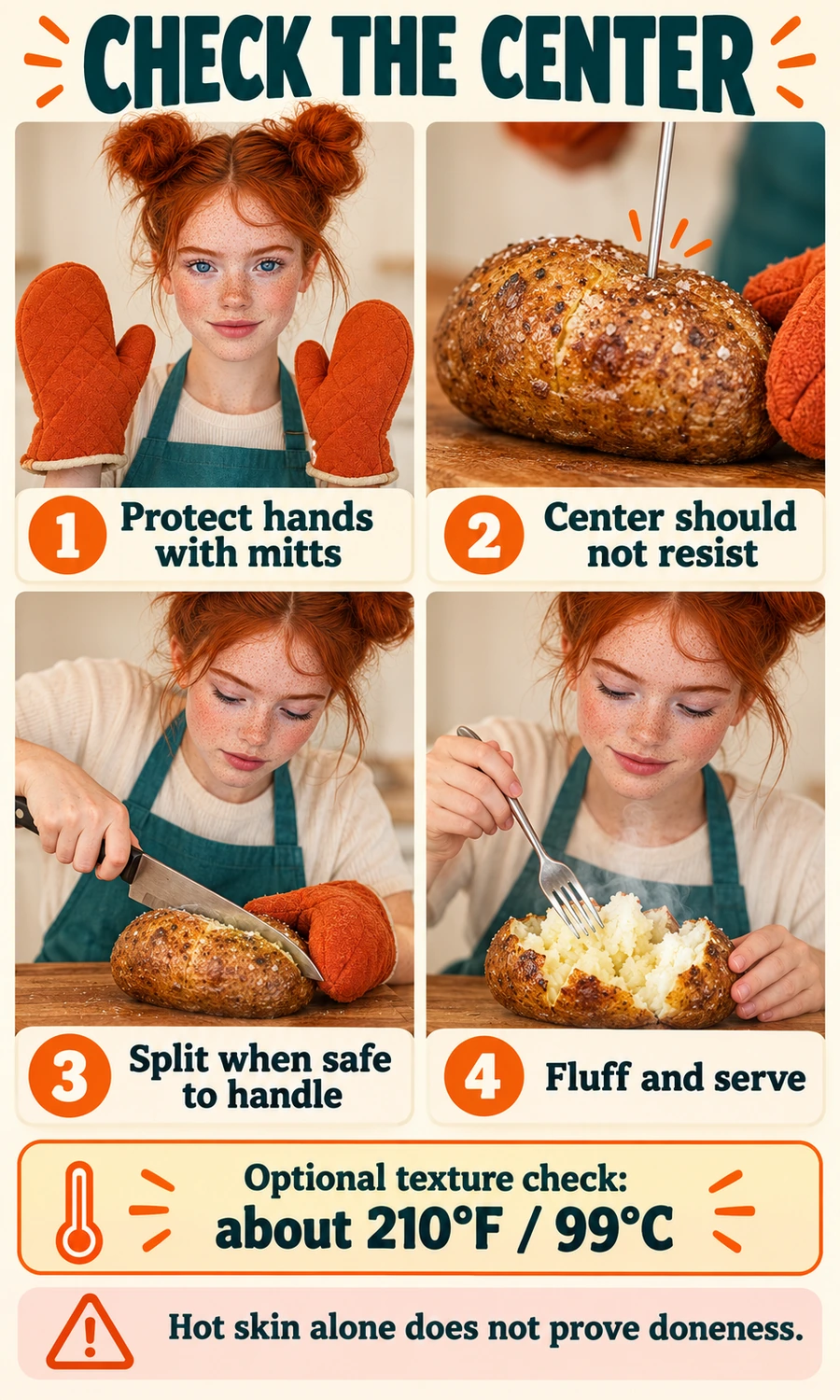
- Protect your hands: remove the tray with dry oven mitts and place it on a heat-safe surface.
- Test the center: insert a thin skewer or knife tip into the thickest part. If there is resistance, continue baking and check again.
- Optional thermometer check: probe the center, avoiding the tray; about 210°F / 99°C is a useful texture reference, alongside tenderness.
- Open safely: once you can handle it safely with protection, split lengthwise on a stable board. Keep fingers clear and your face away from escaping steam.
- Fluff gently: loosen the flesh with a fork and serve promptly. Add toppings after the center is ready.
Choose your next cooking step
Use the Cooking Check to select your cooking stage and center condition. It returns a next action and a printable card, rather than promising an exact finish time. The full instructions above remain available if the interactive check cannot load.

Potato Cooking Check
Use the center and cooking stage to choose your next action.
Clear checkpointsA4 cooking cardThis check gives workflow guidance, not a guaranteed finish time or food-safety certification. Baking needs a tender center; safely stored leftovers need reheating to 165°F / 74°C.
Prepare and bake unwrapped
Scrub, dry, prick 2–3 times and lightly oil and salt. Bake unwrapped at 425°F / 220°C in a preheated conventional oven.
Begin checking around 50 minutes. Keep gaps between potatoes; tenderness decides completion.
Manual method and limits
Scrub, dry, prick and season whole russets. Bake unwrapped at 425°F / 220°C, starting checks around 50 minutes. Continue while the thick center resists; protect hands, split and fluff when tender. Refrigerate leftovers within 2 hours, or 1 hour above 90°F / 32°C, at 40°F / about 4°C or colder. Use within 3–4 days and reheat safely stored leftovers to 165°F / 74°C. Discard unsafe leftovers. Fan ovens vary; follow the appliance manual.
Opening the potato lets steam escape instead of continuing to dampen the skin around the flesh. Gentle fork work separates the tender interior; vigorous stirring can turn the texture heavy. You do not need a long covered rest, and covering a ready potato for an hour works against crispness.
Choose toppings by whether the potato is a side dish or the main part of dinner. Butter and chives keep the texture easy to notice; ready-to-eat beans, plain yogurt or cheese make the serving more substantial. These are serving suggestions rather than separate topping recipes, and any perishable toppings need the same prompt chilling as the potato.
If your real goal is crisp cut edges throughout the dish, whole-potato baking may not be the best match. The separate Parmesan roasted potatoes article covers the cut-potato style instead. Keep those two outcomes distinct: a whole baked potato gives a skin shell around a soft center, while cut potatoes expose more flesh to browning.
How should you store and reheat leftover baked potatoes?
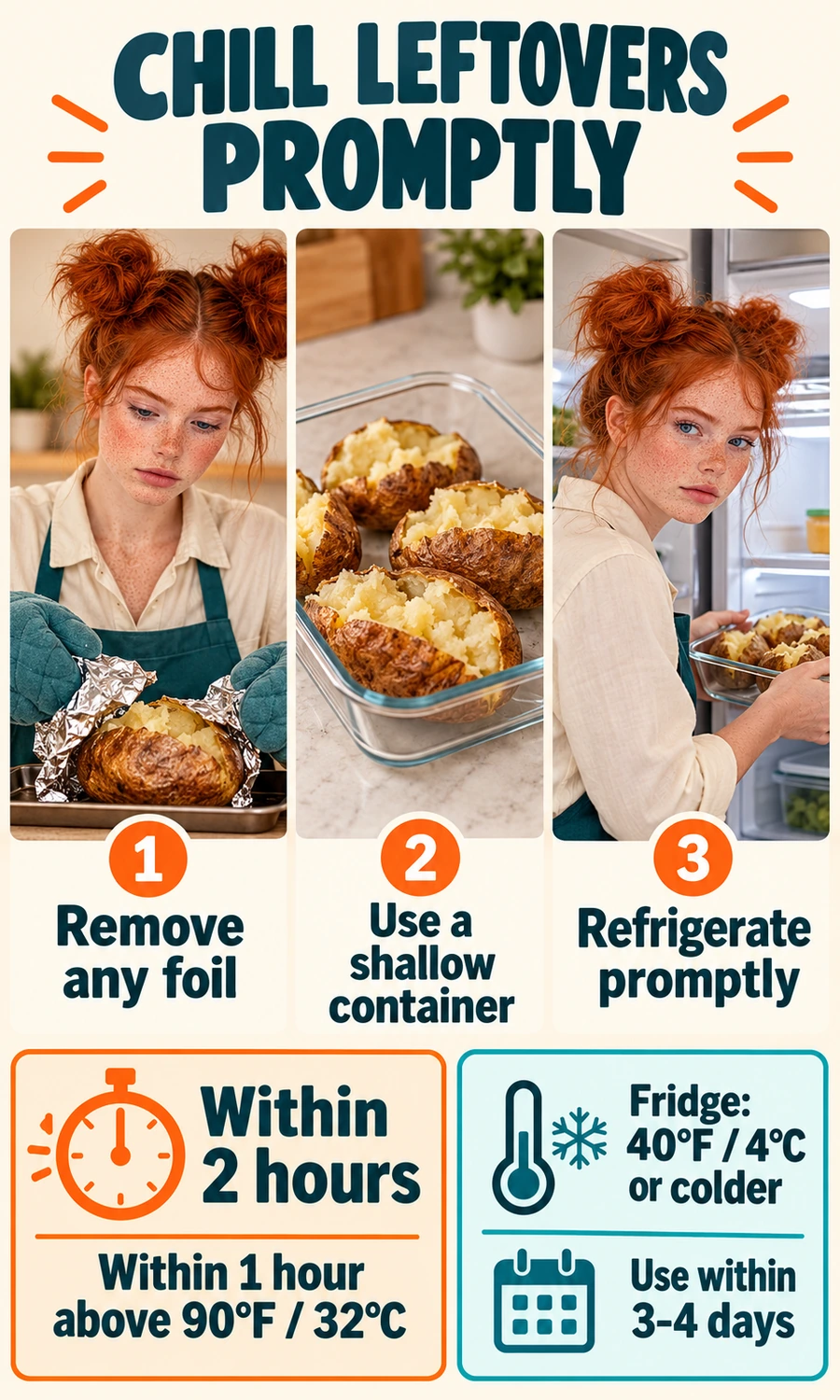
Refrigerate leftovers promptly, and reheat only potatoes that were stored safely. Do not leave cooked potatoes on the counter until they are completely cold. Use the USDA leftover-handling guidance for time limits, storage duration and the reheating endpoint.
Foil deserves particular care because it reduces air around a moist cooked potato. The CDC’s foil-baked potato guidance requires either hot holding at 140°F / 60°C or above, or refrigeration at 40°F / about 4°C or below with the foil loosened for air. Removing the foil entirely is the simpler home-kitchen approach used here; it does not replace prompt refrigeration.
Chill promptly
- Unwrap: remove any foil with protected hands. This method bakes unwrapped, but the rule matters if someone wrapped a potato afterward.
- Use a shallow container: keep leftovers in a small, shallow food-storage container rather than a deep pile.
- Refrigerate promptly: within 2 hours of cooking, or within 1 hour when the surrounding temperature is above 90°F / 32°C. The refrigerator should be 40°F / about 4°C or colder.
- Date and use: eat refrigerated leftovers within 3–4 days. Discard food left out beyond the relevant time limit.
Reheat in the oven
- Preheat: use 350°F / 175°C as a practical starting oven setting for a plain refrigerated potato. This is an editorial reheating setup, not a guaranteed duration.
- Heat: place the potato on an oven-safe tray and heat it until hot through. Size, starting temperature and toppings change the time.
- Verify: check the thickest center with a food thermometer; safely stored leftovers should reach 165°F / 74°C. Handle the tray with mitts and serve once ready.
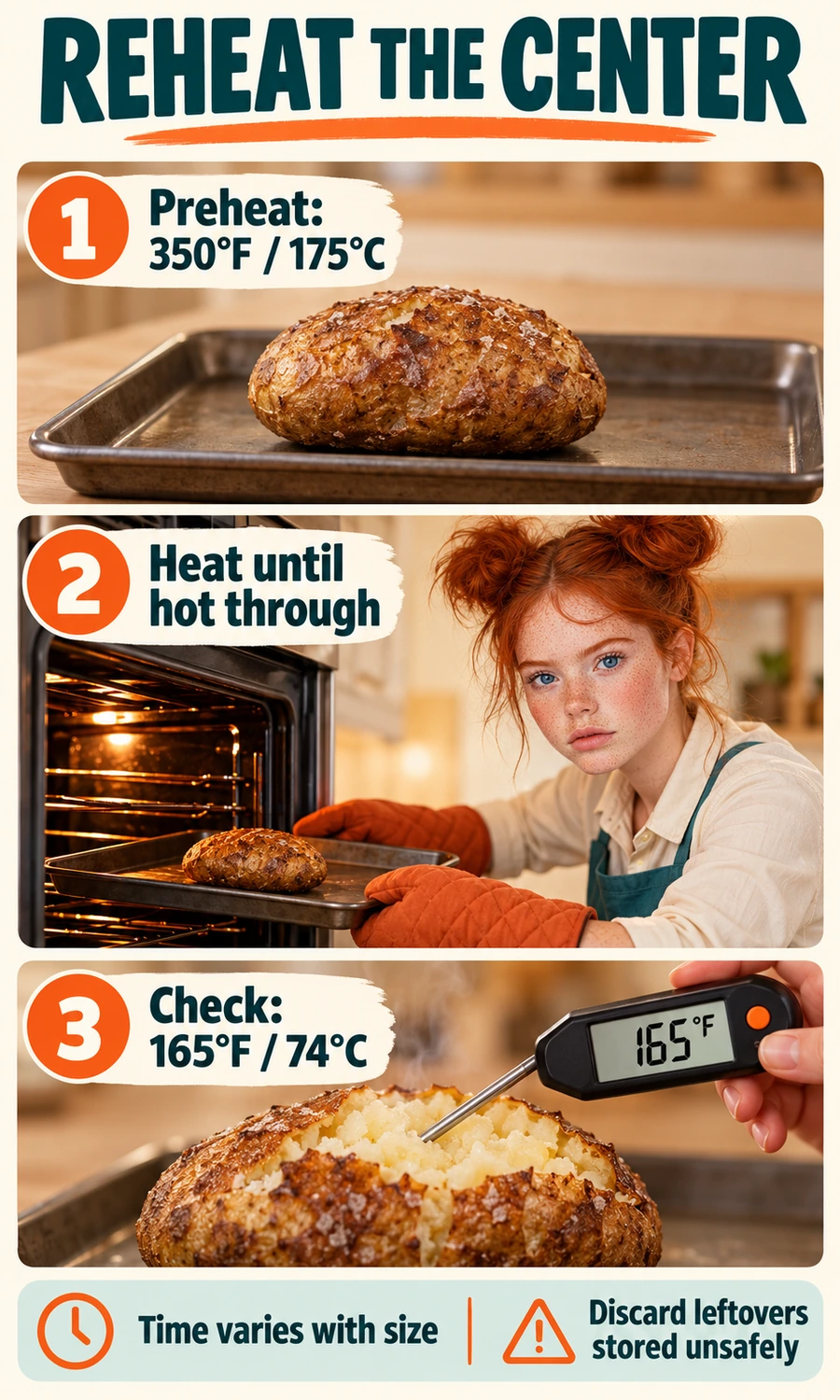
A warmer oven or crisp-looking skin cannot prove that a cold leftover center has reheated adequately. Check the center temperature instead of publishing a fixed reheating time for every size. Reheating is not a way to rescue potatoes that exceeded storage limits, and smell cannot rule out botulinum toxin.
Frequently asked questions
Do you have to peel potatoes before baking them?
No; this whole-potato method keeps the skin on. Scrub away dirt under running water and dry the surface thoroughly. Choose sound potatoes so you are not relying on the recipe to make damaged produce suitable.
Can you bake potatoes without oil?
Yes, the potato can cook without an oil coating. The surface seasoning and eating texture will differ from the lightly oiled method here. Keep the same center-tenderness check rather than using oil as a doneness signal.
Does baking more potatoes mean doubling the cooking time?
No; cooking time is not multiplied by the potato count. Similar size and adequate spacing make a batch easier to manage, while a crowded or heavily loaded oven can behave differently. Check each center and remove individual potatoes when ready.
Do you need to turn potatoes halfway through baking?
Turning is not a required step in this rack-based method. A tray contact point or an uneven oven may produce a different surface on one side. Follow your appliance guidance and let the center test decide completion.
Can you leave a baked potato out overnight and reheat it?
No; discard cooked potatoes left out overnight. They exceed the normal two-hour limit, or the one-hour limit above 90°F / 32°C. Reheating does not make unsafe storage acceptable.
Your next bake
Choose two similar russets and use the same preparation, oven setting and center check each time. Notice which checkpoint changes the result in your oven rather than chasing a universal minute count. The useful finish is crisp skin around a tender center, followed by prompt serving or safe chilling.