
Chronic depression describes symptoms that persist over a long period, while acute depression usually refers to a current episode or an active treatment phase. These terms do not tell you how severe the depression is, and they are not two mutually exclusive diagnoses. The useful comparison is how long symptoms have lasted, whether meaningful recovery occurred between episodes, and how daily life is affected now.
Start with the change that matters today: what has become harder, and when did that change begin? You do not need a perfect history or a self-diagnosis to ask for help. An approximate account on your phone can be enough to begin the conversation.
What do chronic and acute depression actually mean?
Think of “chronic” as a description of time and “acute” as a description of the current episode or treatment context. A person with longstanding symptoms can still experience a sharp worsening that needs acute care. When either word appears in a report, its meaning depends on the surrounding diagnosis and clinical description.
Major depressive episodes generally involve symptoms lasting at least two weeks, but that is a diagnostic minimum rather than a predicted recovery time. An episode can continue much longer. Persistent depressive disorder has a longer duration requirement, alongside other criteria, so duration alone cannot establish it.
| Term | What it describes | What it does not prove |
|---|---|---|
| Acute episode / acute treatment | A current period of illness or treatment directed at current symptoms | That symptoms began suddenly, are mild, or will end quickly |
| Chronic depressive symptoms | Symptoms continuing over a prolonged period | That the person has only mild symptoms or cannot improve |
| Persistent depressive disorder (PDD) | A defined persistent pattern; in adults, depressed mood for at least two years, plus other criteria | That every person depressed for two years has PDD |
| Recurrent depression | Distinct depressive episodes over time | That symptoms were continuously present between episodes |
| Severity | Symptom burden, distress, functional impact and clinical risk | How many months or years the problem has lasted |
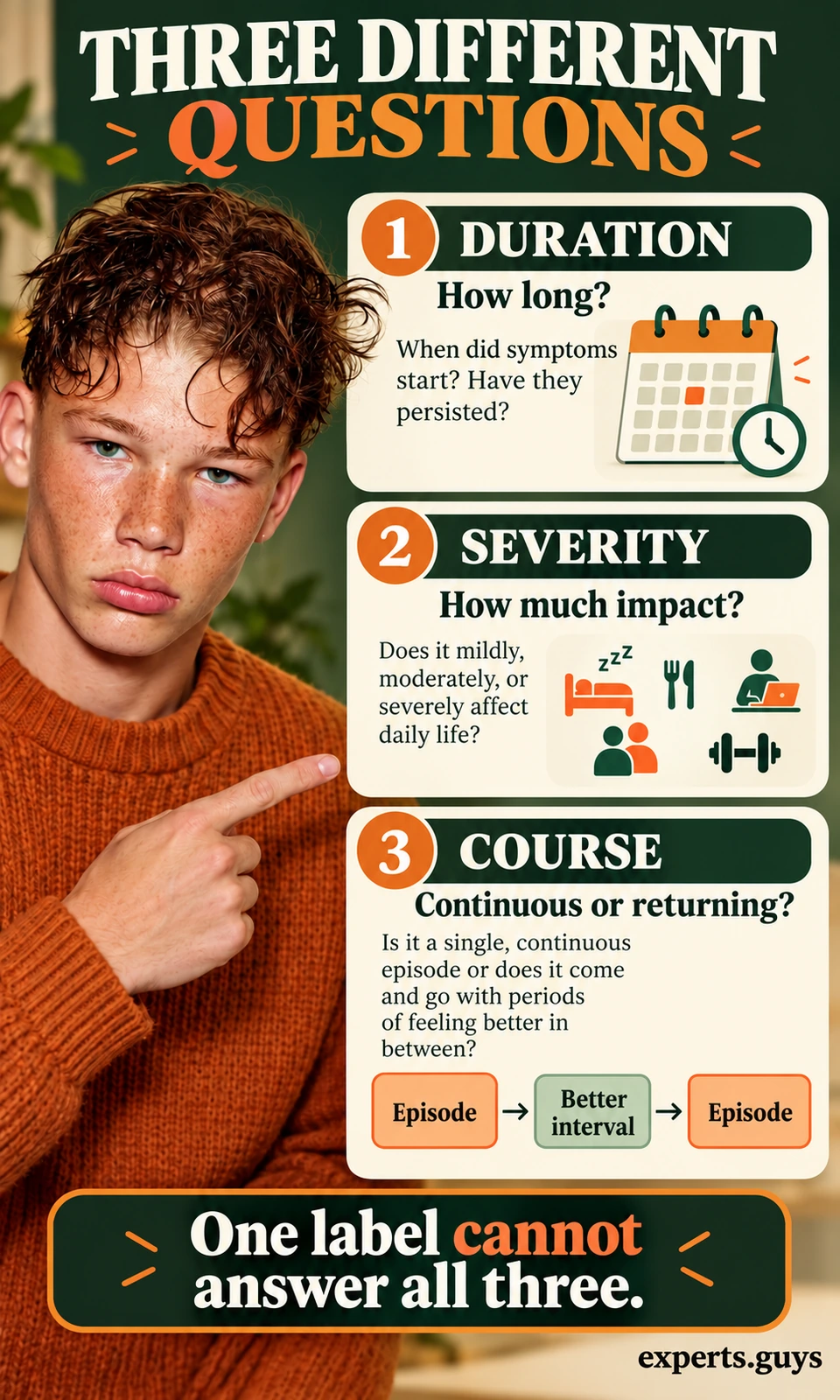
The published PDD criteria also consider associated symptoms, symptom-free intervals and alternative explanations. The duration requirement is one year in children and adolescents rather than two. This article focuses on adult communication and comparison; assessment of a young person needs age-appropriate care.
Chronic depression can include a more severe episode layered onto an ongoing low baseline. Conversely, someone can have separate episodes with substantial recovery between them. The existing dysthymia vs depression comparison covers the diagnostic terminology; this page focuses on describing the pattern without confusing it with severity.
How can you describe the pattern when the dates are unclear?
A clinician needs an understandable history, not a forensic reconstruction of every day. Phone calendars, appointment reminders or messages can provide landmarks if looking back feels manageable. The following steps are editorial communication aids, not validated diagnostic tests or treatments.
Find a time anchor without building a daily diary
Use this when “a while” is the only timeframe you can recall. A memorable event can make an approximate start easier to describe than a blank calendar. Choose an event you already remember rather than searching through years of private messages.
- Open your phone calendar and locate one familiar event, such as a move, course start or holiday.
- Ask whether the change was already present before that event, started around it, or became noticeable afterward.
- Save or dictate one sentence: “Low since around the move in March; exact start uncertain.”
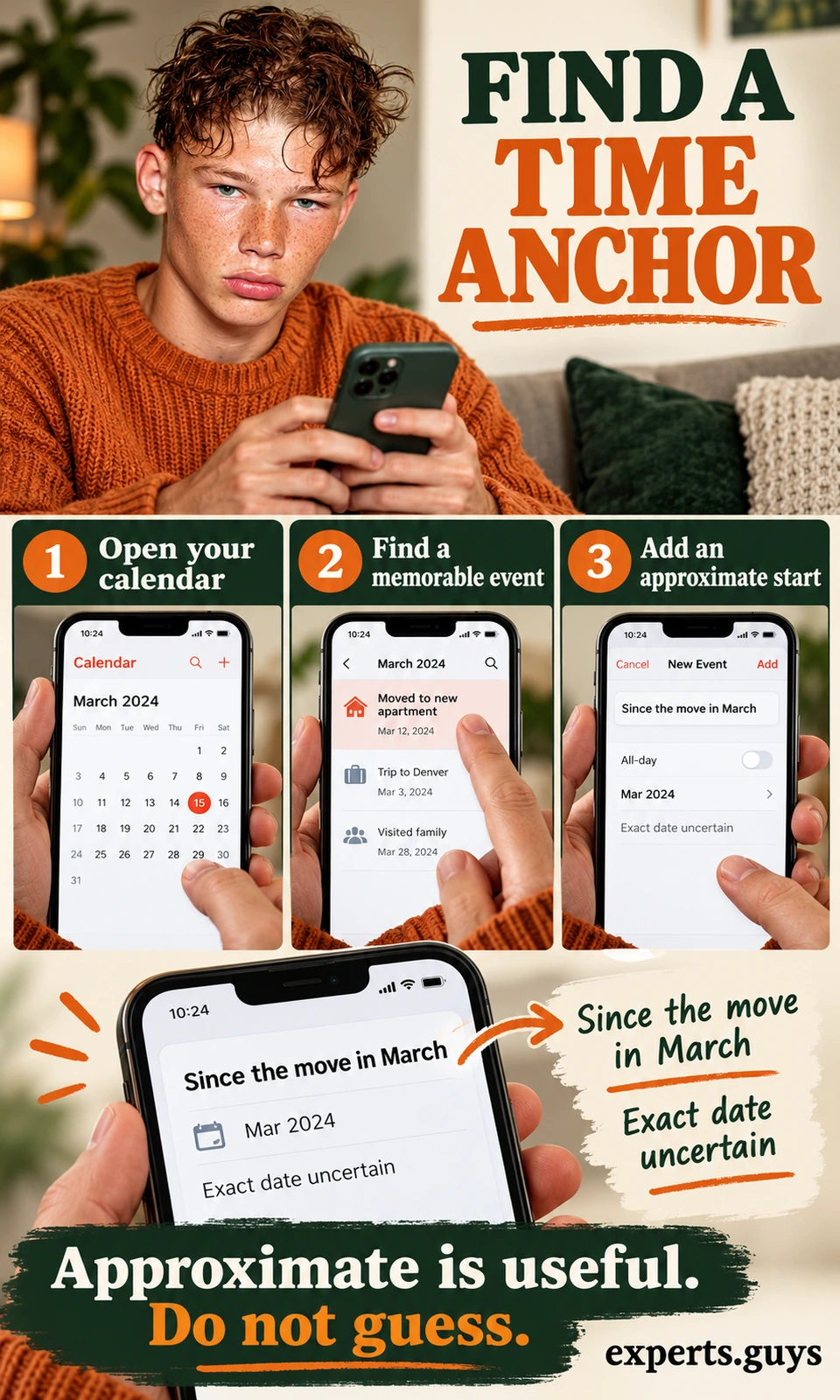
For example, “around the move” communicates uncertainty honestly while giving the assessor a usable reference. Do not convert a guessed month into an exact date simply because an app has a date field. If searching feels exhausting, say the approximate season or “I cannot remember,” and stop; the useful outcome is a clearer description, not a completed diary.
Describe the better intervals
Use this when you are unsure whether the problem has been continuous or has returned. “I felt better sometimes” can mean a pleasant afternoon, several improved weeks, or a sustained return to usual functioning. Those experiences are worth separating because they tell different stories about the course of symptoms.
- Think of the best interval since the problem began, without deciding whether it counted as remission.
- Describe mood, interest or enjoyment, and ordinary functioning during that interval.
- Add the approximate duration and what remained difficult: “Several better weeks, but meals and social contact were still hard.”
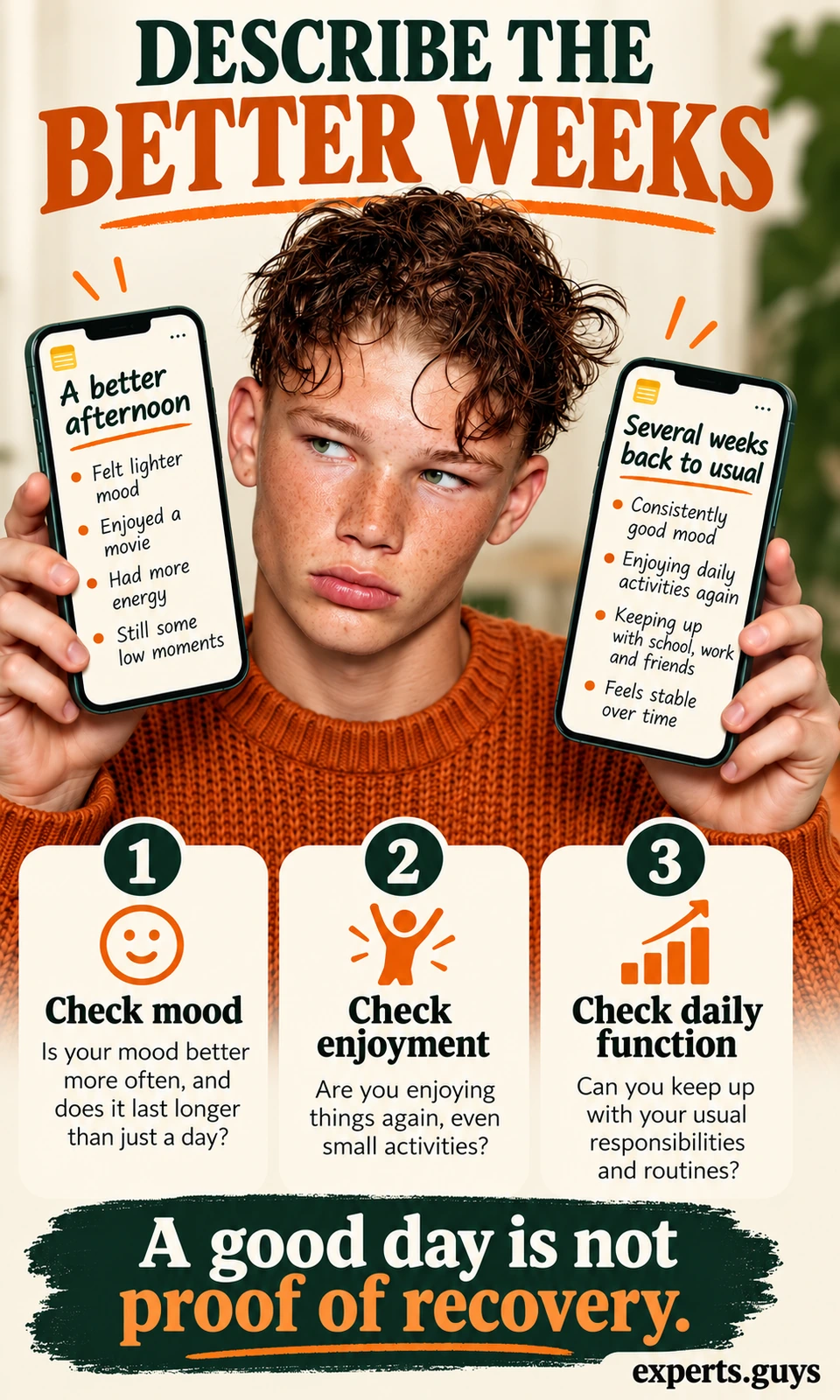
The comparison in the illustration is an example, not a diagnostic cutoff. A good afternoon should not erase several difficult months, and continuing tiredness alone should not be interpreted without context. If you cannot remember, describe only the most recent better period or ask a trusted person for observations with your permission.
The checkpoint is whether your account distinguishes “less bad” from “back to my usual self.” A clinician can then interpret that description alongside the rest of the assessment. For the broader question of persistence and recovery, see is depression a chronic mental illness?
What matters more than the label when deciding what to do?
Current disruption and risk matter even when the history is short or uncertain. Someone who continues working may be using all available energy there and struggling with food, hygiene or relationships afterward. Describing that hidden cost is more useful than judging severity from attendance or appearance alone.
Compare one daily task with your usual baseline
Choose a task that normally matters in your own life, such as preparing dinner or replying to essential messages. Comparing yourself with someone else can hide the change that needs attention. This step gives a concrete example of impact without requiring a numerical mood score.
- Choose one ordinary task and state what was usual for you.
- Describe what happens now, including how often it is missed or how much help it needs.
- Add the consequence: “I usually cook dinner; now I often miss meals and need someone to bring food.”

The example is not a severity scale, and difficulty cooking does not by itself diagnose depression. If one task has changed because of an injury, cost or work schedule, say that too. If comparison feels difficult, describe today alone; a useful result is an observable change rather than a judgment such as “I am failing.”
Add context without deciding the cause
Put relevant changes beside the symptom history rather than declaring that one caused the other. A change in sleep schedule, physical health, substance use or prescribed treatment may be important to discuss. Timing can suggest a question, but it cannot settle the explanation.
- Identify a relevant event or change you already know about; there is no need to search for a hidden trigger.
- State whether symptoms came before or after it, or whether the order is unclear.
- Use neutral wording: “Night shifts started first; low mood became noticeable later; I do not know whether they are related.”
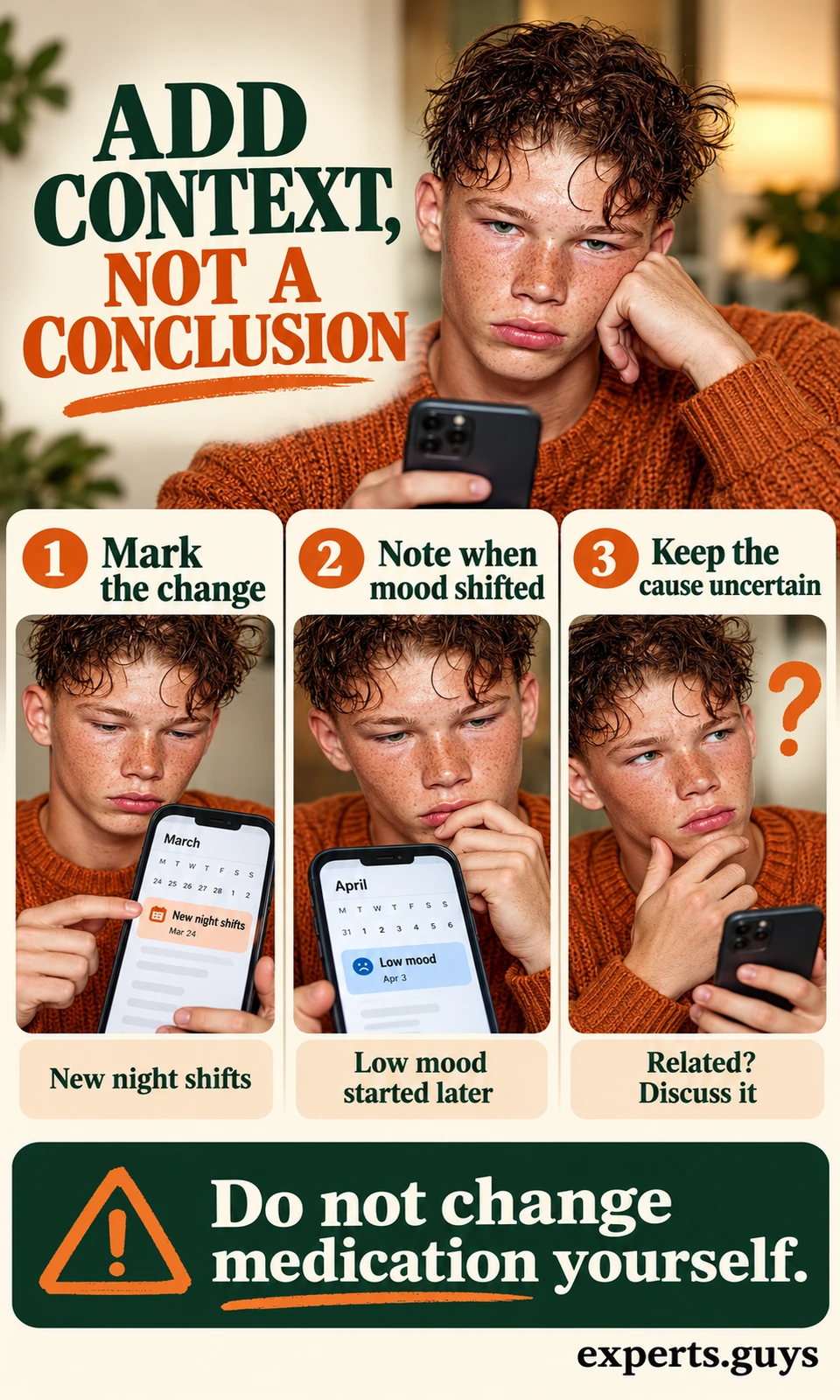
If medication is involved, give the prescriber its name and the change you noticed rather than testing the connection by stopping it yourself. If no event stands out, “no clear trigger” is a complete answer. The goal is to preserve useful context while leaving the cause open to proper assessment.
Periods of unusually high energy, markedly reduced need for sleep or impulsive behavior also belong in the history. They are not automatically evidence of recovery from depression. The NIMH explanation of depression and assessment describes why mood history and possible medical explanations matter.
How should you use the comparison in an assessment or follow-up?
Bring the duration, intervals and functional change together in a short request rather than choosing a diagnosis first. Treatment decisions can involve preferences, previous response, other health conditions and current severity. A long history deserves attention, but it does not automatically require a particular medicine or mean that treatment cannot help.
Send a clear assessment request
Use a private patient portal or the clinic’s approved contact method when arranging routine care. Put the main concern first so the reader can understand why you are asking for an appointment. These examples are intended for communication, not for automated triage or emergency messaging.
- State the approximate duration and the most recent change.
- Add one concrete effect on daily life.
- Ask for an assessment: “Low since March. Worse this month. Missing meals. I would like an assessment.”

If typing is difficult, dictate the same words into your phone or read them during a call. Avoid sending an entire chat archive when four clear sentences can explain the concern. Check that the message reached the intended clinic and learn its expected response time; use urgent services instead if safety deteriorates while you wait.
Agree what to do if the pattern worsens
For someone already receiving care, a useful follow-up question is what change should prompt earlier contact. Personal warning signs can be more recognizable than the label “relapse.” The response should fit the care arrangement you actually have, including what to do outside office hours.
- Name an early change from your own experience, such as meals becoming harder or withdrawal increasing.
- Agree with your care team who to contact and what response to take if that change returns.
- Save the agreed contact and response in an accessible phone note; use emergency care immediately for immediate danger.
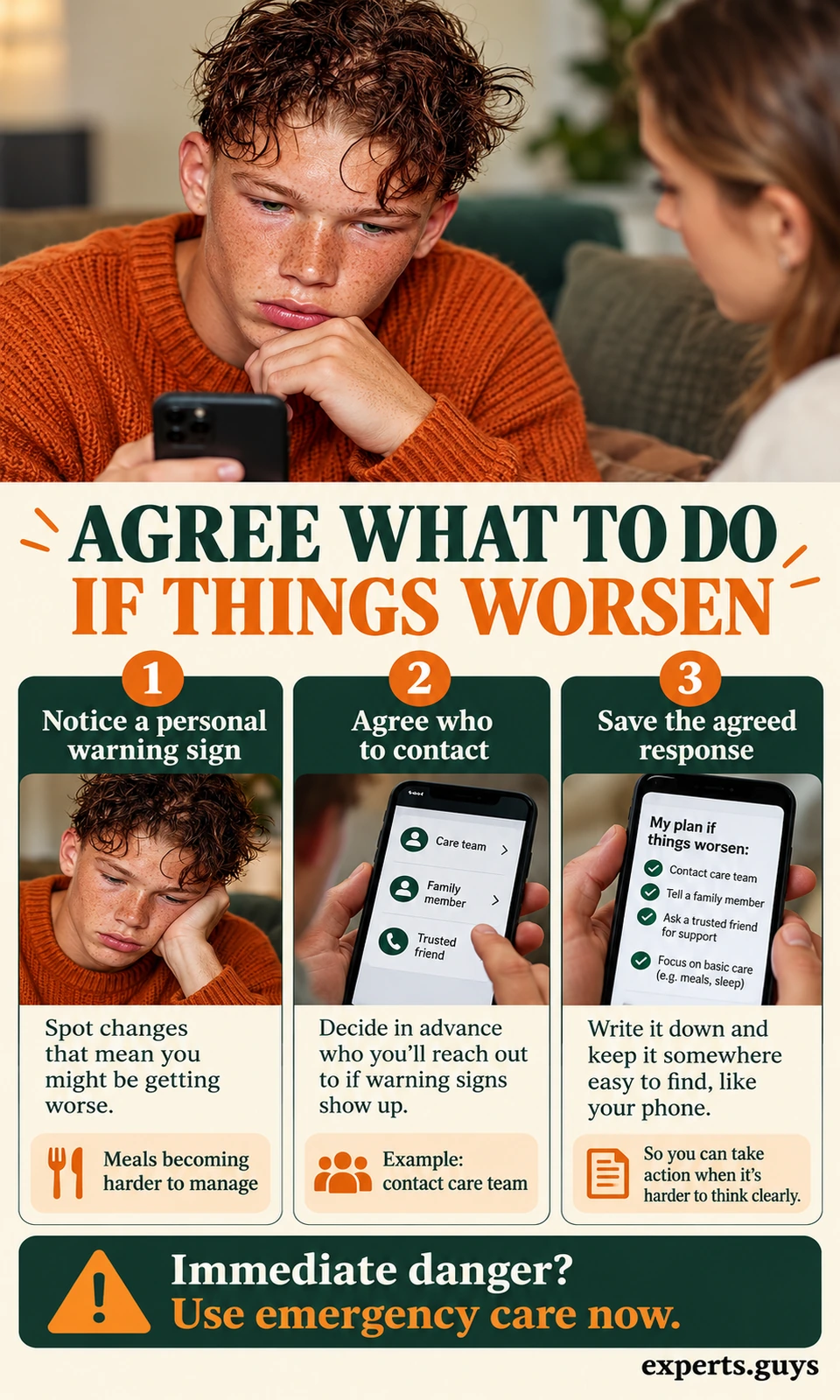
Do not invent a rule such as “wait seven days” when your team has not advised one. If no care team is in place, the next step is arranging an assessment rather than creating a treatment plan yourself. An easier version is one saved contact and one agreed action; success means knowing what to do, not proving that symptoms will never return.
Improvement, continued symptoms and future prevention are different subjects to discuss at follow-up. Feeling better does not mean prescribed treatment should be stopped without discussion. MedlinePlus guidance on persistent depressive disorder explains ongoing care, warning signs and medication precautions.
Common interpretation mistakes
| What you might assume | More useful interpretation |
|---|---|
| “It has only been a few days, so it cannot be serious.” | Risk and major functional change can require help before a diagnostic duration threshold. |
| “It has lasted years, so this is just my personality.” | Familiar symptoms can still be distressing and deserve assessment. |
| “I had a good weekend, so the whole episode is over.” | Describe the improvement and its duration; avoid declaring remission yourself. |
| “Chronic means treatment-resistant.” | Duration and response to adequate treatment are separate questions. |
| “Acute treatment means emergency treatment.” | Acute can refer to treating the current episode; emergency care depends on immediate risk. |
Frequently asked questions
Can chronic depression feel normal to the person experiencing it?
Yes, a long-standing low baseline can become familiar. Familiarity does not show that the symptoms are harmless or unchangeable. Describe concrete effects on daily life rather than relying only on whether the mood feels unusual.
Does chronic depression mean treatment-resistant depression?
No. Chronic describes persistence, while treatment resistance concerns response to adequately delivered treatments. A clinician needs the treatment history and possible reasons for limited improvement before using that description.
Can acute treatment be provided outside a hospital?
Yes. Acute treatment can describe care for a current episode in an outpatient setting. The need for hospital or emergency care depends on safety, clinical severity and the support available, not on that word alone.
Should I wait until I know which label fits before making an appointment?
No. You can request an assessment using the approximate duration, recent changes and effects on daily activities. Uncertain dates or an unclear pattern should not prevent that conversation.
Does this comparison diagnose depression in teenagers?
No. Young people need an assessment that considers development, school, family and safety. Some duration criteria differ from those for adults, so this adult comparison should not be used as a self-diagnosis checklist.
Your next step
- Choose one approximate time anchor.
- Describe any meaningful better interval without labeling it.
- Give one example of what has changed in daily life.
- Use those details to request an assessment or clarify your follow-up plan.
The purpose is a clearer conversation about your experience, not a label produced by a calendar. All illustrated people, messages and scenarios are AI-created educational examples, not patient records or evidence of treatment outcomes. This article provides general information and does not diagnose an individual.